
The Manx Wildlife Trust is the island's leading nature conservation charity with over 300 acres of land as reserves, and we are promoters and champions of the wonderful wildlife and habitats in, on and around our beautiful island and keep a close eye on what is happening to it.
This month we are asking all you citizen scientists for your sightings of the common lizard around the island.
Living up to its name, the common lizard is the UK’s most common and widespread reptile; it is the only reptile native to the Isle of Man.
It is found across many habitats, including heathland, moorland, woodland and grassland, where it can be seen basking in sunny spots.
.jpeg?width=209&height=140&crop=209:145,smart&quality=75)


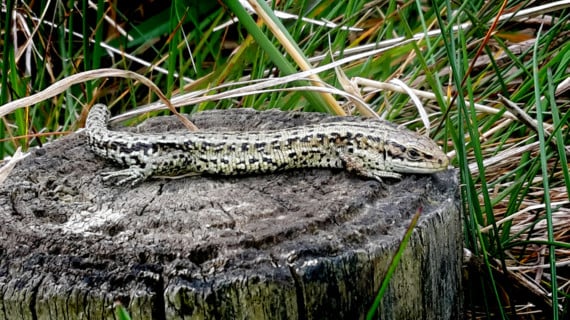
Also known as the ’viviparous lizard’, the common lizard is unusual among reptiles as it incubates its eggs inside its body and ’gives birth’ to live young rather than laying eggs.
Adults emerge from hibernation in spring, mating in April and May, and producing three to 11 young in July.
You are likely to see them between March to October and at this time of year will be basking on a wooden post or rock, soaking up the sunshine to warm their little bodies.
This is a visitor which you would welcome into your garden as they eat insects and can keep garden pests down.
You can encourage them by leaving piles of wood around and rockeries for them to bask on.
They really are delightful creatures to watch and have the most beautiful patterns on their bodies.
In their turn they are a food source for many birds such as hawks. Luckily they have a mechanism of escape and can shed their tails leaving it behind wriggling to confuse their predator!
The common lizard is variable in colour, but is usually brownish-grey, often with rows of darker spots or stripes down the back and sides.
They are usually 10 to 15cm long and live between five to seven years.
Males have bright yellow or orange undersides with spots, while females have paler, plain bellies.
Lizards are protected by the Wildlife Act of 1990 (and the revised order in 2004) and should not be captured or removed, except under licence, and also the places of shelter or protection of lizards are also protected against damage, destruction or the obstruction of access.
We would love to know the distribution of lizards around the island and keep an eye on their numbers as they are on the decline in the UK and on the biodiversity action plan.
If you spot one please contact the Manx Wildlife Trust with these details, especially the species you have seen, the date, location and, ideally, a map reference. as it is better to have a six figure grid reference) and any photographs which you take.
Send this information plus a contact for you in case of any queries and either as an email to [email protected] or message us on our Facebook page.
Thank you for helping our wildlife, your observations are of value for us.
by Dawn Dickens
www.manxwt.org.uk
Comments
This article has no comments yet. Be the first to leave a comment.