
The Manx Wildlife Trust is the leading nature conservation charity on the Isle of Man, protecting the fragile Manx wildlife by creating living landscapes, living seas and encouraging and fostering a society where nature matters.
The evenings are getting lighter and our thoughts are turning towards spring.
Nature is beginning to slowly wake up and the countryside has splashes of colour again.
It’s that waking-up and the dates it is happening that we are very interested in, as climatic change is causing nature to respond in different ways.




This month we are looking at the dates of early woodland plants flowering and we need people to get out into our glens to search for us. We are especially interested in the flowering of lesser celandines and wood anemones.
We know excellent places to spot them are in our Cooildarry reserve and also try the banks of the the Sulby River at the Claddaghs. Maybe they are in a wooded spot in your garden?
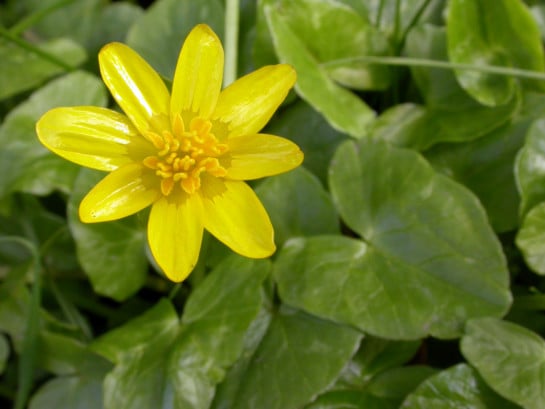
Lesser celandine is a low-growing commonly found plant with glossy green, heart-shaped leaves and bright yellow, star-like flowers, about 3cm across, which typically open in the sunlight. The plant is 25cm tall.
As one of the first spring flowers to bloom, it provides a valuable nectar source for early insects.
Despite its name, it is not actually a close relative of greater celandine, and is a member of the buttercup family instead.
Did you know that celandines are mentioned in ’The Lion, the Witch and the Wardrobe’, when Aslan returns and the wood turns from winter to spring: ’Edmund saw the ground covered in all directions with little yellow flowers - celandines’.
Wood anemones are an easily-recognisable and common flower, with six to seven large, white or purple-streaked ’petals’ (which are actually its sepals), surrounding a cluster of distinctive yellow anthers.
Its leaves are deeply lobed and it has a thin, red stem. Its white flowers bloom before the woodland canopy becomes too dense, but its seeds are mostly infertile and it spreads slowly through the growth of its roots.
The wood anemone is named after the Greek wind god, Anemos, who sent his namesakes, the anemones, in early spring to herald his coming. This legend gives the flower its other common name of ’Windflower’.
This study of the of cyclic and seasonal natural phenomena, especially in relation to climate and plant and animal life, is known as phenology.
Happy hunting and take time to also enjoy the scenery and sights of our fabulous glen and woodlands. You could even make hunting for celandines and wood anemones an annual event.
We need the help of the public to become citizen scientists and report back to us with their findings at [email protected] remember to tell us the location, date, species and your name and a contact detail in case of queries.
Photographs are always a bonus too because we want to know the trends we need this sort of data year after year.
The Manx Wildlife Trust is the Island’s leading nature conservation charity, protecting Manx wildlife for the future.
Eight of our 24 reserves are open to the public and we encourage locals and visitors alike to visit them and enjoy their tranquility and cherish the sights and sounds found on them.
by Dawn Dickens
www.manxwt.org.uk
Comments
This article has no comments yet. Be the first to leave a comment.