
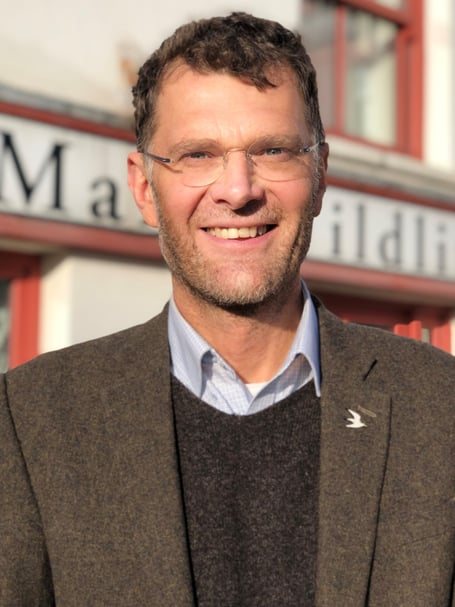
The new boss of the Manx Wildlife Trust has moved to the island after spending two years in the remote British territory of St Helena.
Leigh Morris has more than 35 years’ experience in horticulture, education and conservation, and senior management experience across a range of environmental organisations.
He is a Chartered Horticulturist, holds a masters degree in international horticulture, and has been a trustee of the Marine Conservation Society for a number of years.
Mr Morris started out managing an ornamental plant nursery before lecturing and managing programmes in agricultural colleges.
~2-(1).jpeg?width=209&height=140&crop=209:145,smart&quality=75)
-(1).jpeg?width=209&height=140&crop=209:145,smart&quality=75)

He then spent 10 years leading education and learning at the Royal Botanic Garden Edinburgh, supporting plant conservation across the globe.
The MWT’s new chief executive officer was subsequently director of community conservation at the Royal Zoological Society of Scotland, leading biodiversity and education and public engagement programmes across Scotland, and then became the first chief executive officer of the UK National Land Based College, to develop land-based sector skills.
Directly before to joining the MWT Leigh spent two years on the remote UK overseas territory of St Helena in the South Atlantic - the island to which Napoleon Bonaparte was exiled - where he undertook a strategic assessment of agricultural development needs and led an agricultural educational programme for the island.
Mr Morris was appointed vice-president of the St Helena National Trust, guided the establishment of their marine team, facilitated their strategic planning process, and was commissioned to develop waste management on both St Helena and Ascension Islands.
He said: ’I have joined a wonderful organisation at MWT, with a team of passionate and talented people, at a time when biodiversity conservation and caring for our environment are as high as they have ever been on the global and island agenda.
’I am excited to contribute to the organisation’s development and see a fantastic opportunity for the MWT to play a key strategic role, in partnership with other organisations on the Isle of Man, to deliver the ambitions of our UN Biosphere status.
’We have the potential to be part of an island-wide initiative that can make a huge positive contribution to the island and, importantly, be a model that other countries can follow.’
He said that the Isle of Man had wonderful natural habitats on land and sea and noted that 75% of the land was in agricultural use.
’I’m looking forward to working closely with the Department of the Environment, Food and Agriculture, Manx National Heritage, other conservation non-government organisations on the island, and all those working in the agricultural/environmental sector,’ he added.
’Key objectives for the MWT this year will be the development of our new strategy, and one immediate ambition I have is for the MWT to connect with, inspire and enable more of the wider Manx population to work with and support us to achieve our goals.’
Comments
This article has no comments yet. Be the first to leave a comment.