
People rightly associate the ManxSPCA with the rehoming dogs, cats and other domestic pets, and with the welfare of the island’s wild animals, but the public often contact us when they are concerned about farm animals, particularly sheep and cows.
The welfare of farm animals is heavily regulated and monitored by the Department of the Environment, Food and Agriculture and so we notify the Department of the Environment, Food and Agriculture when we receive reports relating to the welfare of farm animals, and assist where we can.
Most reports at this time of year are about livestock living in muddy fields.
Provided they have access to a non-muddy area of their field and have sufficient forage (for cattle this usually includes the provision of hay in the form of a large round bale) then they cope quite well with wintry conditions.



.jpeg?width=209&height=140&crop=209:145,smart&quality=75)
Most livestock will lose weight at this time of year, as they use up calories to heat their bodies and the lush spring grass is yet to appear.
The same cannot be said for our pampered pooches, who often pile on the pounds in the winter months when they get less exercise and live in centrally heated houses. It is estimated that almost half of the UK’s dogs are overweight putting them at increased risk of health problems, like diabetes and heart disease, that will shorten their life.
Your dog’s weight can be controlled by getting their exercise and diet regime right.
Dog treats are a source of extra calories and there are more and more of them on the market to tempt loving owners. Many of them are labelled ’healthy’, ’natural’, and ’low fat’, but they all have calories.
They are often given in addition to a dog’s normal food intake, whereas the normal food intake should be reduced to accommodate the treats. If treats are given by various members of a dog’s family, without monitoring, they can add a significant number of calories to the daily diet.
How can you tell if your dog is overweight?
Look at them from the sides and above - they should have a smooth, tucked-in waist.
Feel under their tummy - it should go in, and not bulge out.
Feel along their side and back - you should be able to feel their ribs, spine and hipbones quite easily, but they shouldn’t stick out.
Feel the base of their tail - there shouldn’t be any build-up of fat where the tail meets the back.
The kennels team work hard to ensure that our rescue dogs have the right diet, including a moderate amount of treats that are given as rewards. The dogs are weighed weekly and they are given plenty of exercise, and so any dogs that arrive carrying a bit too much weight soon lose it.
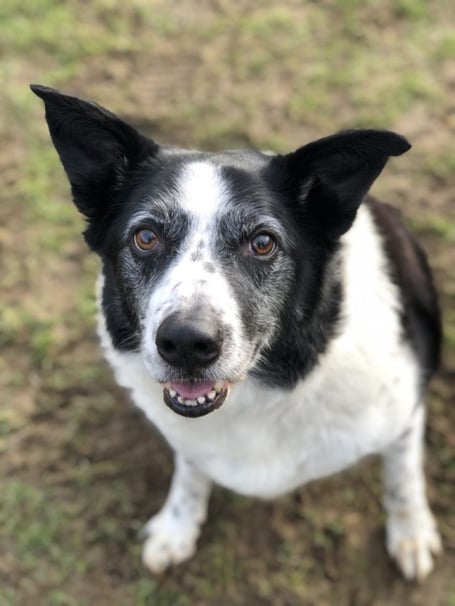
Riley, a nine-year-old border collie, hasn’t been with us very long and so his diet has only just begun. He is a little on the ’cuddly’ side and he’s a bit of a foodie, but he is an active dog and so it shouldn’t take too long for his waistline to return.
Riley is great fun, and a little bit cheeky, and he never seems to tire when you agree to play a game of fetch with him. He gets on with most other dogs and he’s great with older children (although he doesn’t like cats), and he needs a home with owners who have the time to invest in him. As with all border collies, he needs mental and physical stimulation, as well as a comfy bed to call his own when he eventually takes a snooze.
Riley will be taking part on our Valentine’s Day dog walk, Love in the Wood, searching for love hearts in South Barrule Plantation.
Please come and join him on the 14th between 6pm and 8pm, and make sure you’re suitably dressed and your dog is on a lead.
Comments
This article has no comments yet. Be the first to leave a comment.