
The past week has been a distressing one, with the ManxSPCA receiving several reports about dogs chasing sheep and, on one particular farm in St John’s, killing two young male sheep.
The farmer described finding the dead sheep as one of the most distressing things she has ever witnessed - the sheep had been savagely attacked and their final moments must have been both terrifying and painful.
What is almost equally distressing is that the dog concerned has not been traced.
It must have had a substantial amount of blood on its jaws and face, and yet its whereabouts and owner’s details remain a mystery.


.jpeg?width=209&height=140&crop=209:145,smart&quality=75)
You might think that your dog is the most placid, well-behaved and loving creature ever, but all dogs have the capacity to injure sheep. Even if a dog doesn’t physically attack sheep, simply chasing them can cause immense stress resulting in ewes aborting their unborn lambs, and scaring lambs so that they run off and become separated from their mothers.
Please remember: livestock worrying is a criminal offence, and if a dog is caught by a landowner in the act of worrying livestock, the dog may be shot. As the owner you may be liable to prosecution and subject to a fine, and the courts have the power to place a control or destruction order on your dog.
The National Sheep Association has undertaken research that concluded that most attacks on sheep are carried out by single dogs.
The research also concluded that farmers felt that the most likely cause of the attacks was that dog owners assumed that their pet would not attack livestock or cause any damage if it did; and the second most likely cause was that owners did not keep their dogs on a lead.
Please observe the Countryside Code when you are out walking your dog, and keep your dog on a lead when you are near sheep.
But please also remember that if you are chased by cattle you should let your dog go - the cattle will probably follow the dog, and they will be able to run faster than you and find safety.
A surprising number of dogs escape from their owners’ homes.
Is your back garden secure enough to keep your dog contained? Is the fence high enough, and does the gate close properly, or is it all too easy for visitors (especially delivery drivers who may never have been to your property before, unlike your post man or woman) to leave a gate open?
If you do lose your dog, or if you find a stray dog, on week-days between the hours of 9am and 5pm please contact the Island’s Dog Warden Service on 686688.
The ManxSPCA will endeavour to help at all other times, not least by using social media to try to locate an owner.
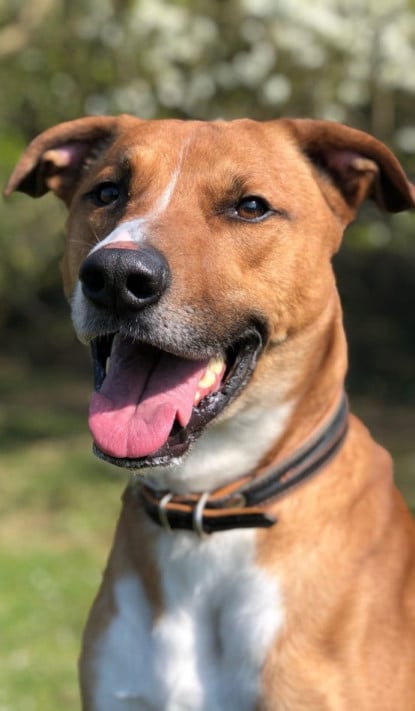
Our dog of the week is the handsome Jeff. He would be best suited to a rural environment where he can play and explore, but his new owners will need to take the precautions outlined above to ensure he doesn’t ’play’ with neighbouring sheep.
Jeff is only four and he’s full of energy.
He’s a lurcher cross and so he enjoys small, fast bursts of running around followed by a snooze.
We think he’d be best as the only pet in a household, with older children, and with new owners who will have the time and patience to get to know him and develop a loving bond that will last a lifetime.
Although the adoption process can take weeks, even months, whilst prospective new owners get to know a dog, and we always rehome dogs thinking that they are going to their ’forever homes’, sometimes this is not the case.
Poor Amber, the Egyptian Pharaoh Hound, has returned to kennels after spending more than six months in her new home.
She suffers from separation anxiety and she had lost a lot of weight (which, happily, she’s now regaining), and so we are looking for new owners who can spend as much time as possible with her and enable her to be the constant companion that she so obviously needs to be.
To read more about the scourge of sheep worrying, see the food and farming pages in this week’s Manx Independent, which is in shops now.
Comments
This article has no comments yet. Be the first to leave a comment.