
One of the most frequent types of call we receive is about dogs barking - the caller is usually concerned about the welfare of the dog, and worried that it is being left on its own for long periods of time.
Although these situations are far from ideal, often all we can do is give advice to the dog’s owner.
Sometimes an owner is blissfully unaware of the extent of their dog’s barking because it’s only happening when they are out of the house. Neighbours can help each other by talking things over and trying to reach an understanding about the extent of the problem.
As a dog owner, there are some simple steps you can take to cut down the amount of noise your dog is making:

.jpeg?width=209&height=140&crop=209:145,smart&quality=75)


If you dog barks at things outside, screen the windows.
If you live in a semi-detached house, try to house the dog away from party walls.
Make sure your dog gets sufficient exercise before you go out - a tired dog will bark less.
Leave the dog with toys and chews to play with, and put on a radio or TV.
If your dog barks when you are in the house to known ’triggers’ such as the postman arriving, use a toy to divert their attention and praise your dog for not barking.
If the reason for your dog’s barking is that he or she is guarding their territory, the measures above will help. But if the reason is that your dog is suffering from separation anxiety, you will need to teach your dog that’s it’s OK to be left alone.
This training can take several months, and needs lots of patience from you and positive reinforcement for your dog, and you may need to enlist the help of your vet or a dog trainer (the Association of Pet Behaviour Counsellors’ website may also be helpful - www.apbc.org.uk).
And please don’t think that getting a second dog will automatically solve the problem, because this may make an anxious dog even more insecure.
If a dog’s barking is a nuisance to neighbours they may report the problem to the Department of Environment, Food and Agriculture as ’noise pollution’, and this may result in the dog’s owner being issued with a statutory abatement notice or a fine.
Cats are generally less of a neighbourhood problem.
Neutering them makes them less likely to howl at night, seeking out mates, but most cats have a tendency to prefer going to the toilet in a neighbour’s garden rather than their own.
here isn’t an easy solution to that problem. Cats will be cats!
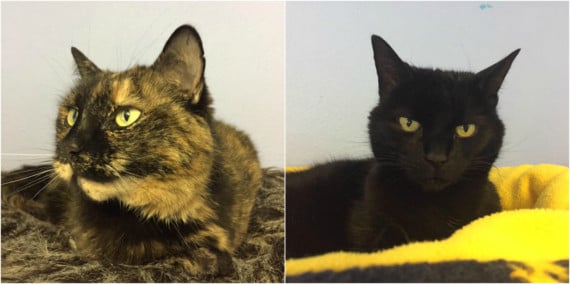
Holly and Molly simply want a garden to call their own - they are our longest-stay cats, and came into the cattery in September last year.
They have had very little interest in them, and we are perplexed by this because they are such lovely girls. Holly, the tortoiseshell, is 14 and Molly, who is all black, is 12 and they were gifted in to us because their owner was moving away.
Age may be a reason why they have not been adopted, although we have rehomed older cats in the last few months; Molly being black (an unpopular colour) may be a factor; and the fact that they are a pair may be another reason why they are still with us.
They are not a bonded pair, as such, and so we would be happy to rehome them as single cats - they have very individual personalities and they don’t interact with each other.
Tabby and Monster, who have been with us since January, are a bonded pair. We are wondering if Monster’s name is off putting to potential adopters? We tend to keep a cat’s name when we know what it is, although more often than not a new owner will change it, but maybe we need to give Monster a new identity more in keeping with his lovely looks (he has luscious long black fur) and personality - Magic, Cola, Sooty, Midnight, Guinness? If you have access to Facebook let the cattery team know what you think by posting on the ManxSPCA cattery page.
Comments
This article has no comments yet. Be the first to leave a comment.