

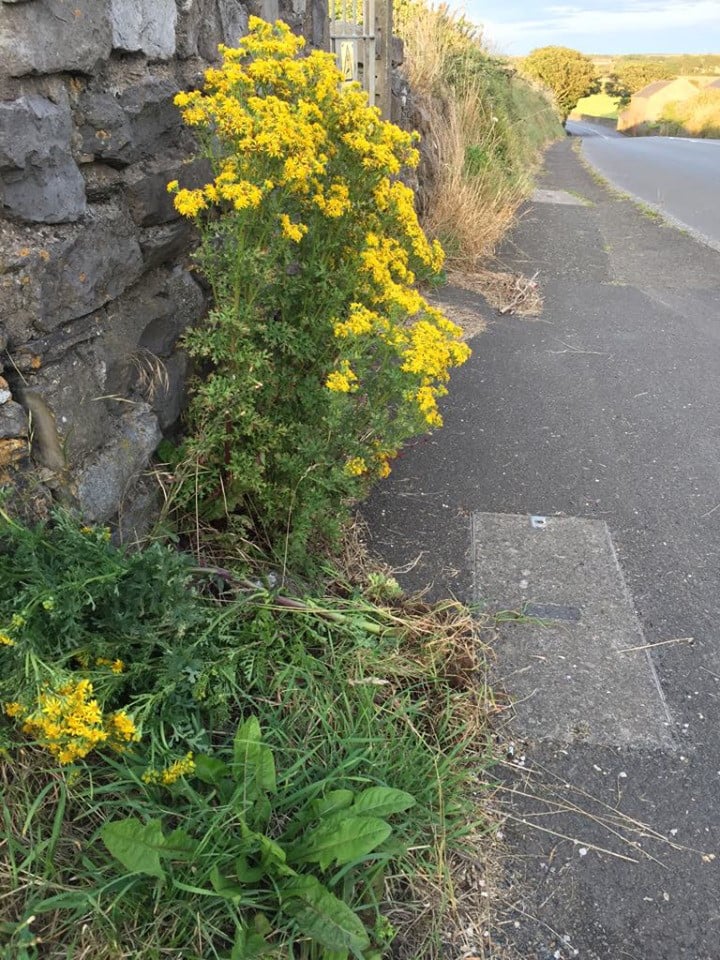
The cushag plant is the national flower of the Isle of Man and was, according to legend, chosen by King Orry as his emblem.
However, cushag is also known as common ragwort (senecio jacobaea) and because it is poisonous it can pose a significant threat to grazing livestock, particularly horses, cattle, free-range pigs and chickens, and sheep can be susceptible too.
It is classed as an ’injurious weed’ under the UK’s Weeds Act 1959.
A survey conducted by DEFRA and the British Horse Society found 20% of 14,000 respondents knew personally of instances where horses had been suspected or confirmed to have been harmed by ragwort poisoning.



.jpeg?width=209&height=140&crop=209:145,smart&quality=75)
Ragwort contains alkaloids which cause cirrhosis of the liver and there is no known antidote.
Although it is largely unpalatable, animals will eat it when other grazing or forage is sparse.
The plant flowers from late June onwards and is a common sight on the island at this time of year when it is in its prime, with its bright yellow flowers growing on long, leafy stems of around a meter in height.
It thrives in neglected grass fields and on verges and it prefers light soils of low fertility, particularly in over- or under-grazed pasture.
A single stalk with its multiple flowers can produce 200,000 seeds in one season.
They can survive in the soil for up to 16 years awaiting an opportunity to grow, and the seeds themselves are also poisonous.
How can ragwort be controlled? The most effective way to prevent its spread is to prevent establishment, rather than tackle the problem once the plant has started to set seed.
Simply cutting back ragwort does not destroy the plant, and any cut stems left lying on the ground are still a serious risk to grazing animals, and they will still set seed.
Pulling or digging up the ragwort with its roots intact and then burning it is a more effective way to control it, but you should wear gloves and cover your arms and legs to protect yourself from the plant’s toxicity.
Thankfully, a promising alternative to the use of herbicides is being researched.
It involves the cinnabar moth, which relies upon ragwort for its existence and thrives on its poisonous properties.
These little moths absorb the ragwort toxins when they are caterpillars and they themselves become poisonous, which is why their wings are red and black in colour - a sure sign to birds that they should avoid eating them.
A single brood of cinnabar caterpillars can devour a whole ragwort plant in a day, and over their life cycle they can consume more than 30 plants.
A collapse in cinnabar moth numbers in the late 1980s is thought to be a factor in the subsequent build-up of ragwort, and so scientists are now looking for ways to re-establish the moth as a long-term and environmentally friendly way of curbing ragwort numbers.
The upside to ragwort, apart from the fact that it is our national flower, is that it is a source of food not just for the cinnabar moth but for lots of other insects, including bees.
Pollen from the plant’s flowers is collected by the bees, but if they visit too many plants they produce honey with measurable amounts of the plant’s toxins.
So, we all need to do our bit to keep this plant under control, and remove it from our land whether that be on a small scale in our gardens or on our pathways, or on a larger scale in our pastures and meadows
Comments
This article has no comments yet. Be the first to leave a comment.