
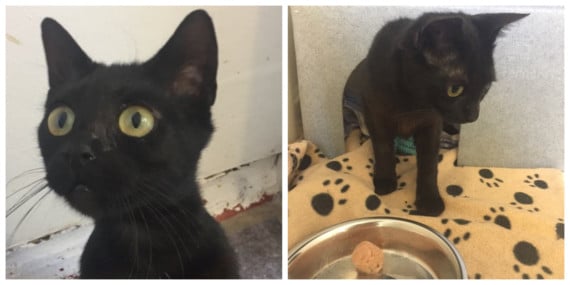
Meet Vanji - possibly the most affectionate and adorable cat ever!
She’s described by the cattery team as ’super playful and a constant bundle of energy’.
She has been with us since March, and has needed lots of TLC and a rage of medication to help alleviate her ’wobbliness’ and lack of balance.
These motor problems have now improved immensely, although she still tilts her head to one side (which makes her look as though she’s curious about everything, all the time), and she is no longer on medication.


.jpeg?width=209&height=140&crop=209:145,smart&quality=75)
.png?width=209&height=140&crop=209:145,smart&quality=75)
Vanji has not been diagnosed with a specific neurological problem, and she has tested negative for other possible causes of underlying ill heath such as toxoplasmosis - and so it may be that she is simply growing out of her problems (she is only nine months old).
For the immediate future she will need to be an indoor cat, so that her movements can continue to be monitored in a safe environment.
Vanji also has a tendency to be sneezy and a bit snotty, and so we recommend that she is the only cat in a house just in case her symptoms are contagious.
However, we’re confident that these ’flu’-like symptoms will clear up completely once she is settled in a home environment.
She is a fussy eater but she has been enjoying iced tuna - just one of the treats we have been giving our cats in the hot weather.
Iced tuna is simple to make: mash a tin of tuna in brine, add a few drops of cod liver oil, pour into an ice cube tray and freeze.
Another simple way to keep your cat cool in the heat is to place a bag of frozen peas wrapped in a towel where he or she likes to sleep, and make sure there are several bowls of fresh water dotted about the house and garden, out of direct sunlight.
Vanji seems perfectly content on her own and she does not make any effort to interact with other cats when she’s out of her pen, although she seems to crave human company.
People sometimes think that a solitary cat must be lonely and they get a second cat as a companion, but vets report that stress caused by other pets in the house is one of the commonest causes of ill health in our pet felines.
How can you tell if your cat is stressed?
here are several signs including aggression towards you or other pets in the house; urinating on carpets; excessive grooming or scratching (to the point where skin becomes raw); constant hiding and evasion of interaction; a loss of appetite; or digestive problems (being sick, diarrhoea, etc.).
How can you reduce stress levels?
If the reason for your cat’s stress is the introduction of another cat, and returning the newcomer is not an option, then you can help to make you cat less stressed by paying him or her lots of attention as often as possible; ensuring that there are plenty of ledges and hiding places for him or her to escape to; providing separate litter trays and feeding stations so that the cats are not forced into each other’s company; and using calming sprays and diffusers (available from vets and pet shops).
You should seek veterinary advice if your cat’s health does not improve, and your veterinarian may prescribe medication that will help with the physical symptoms of stress.
Pub quizzes can be stressful for us humans when we don’t know the answers, but they are good fun and we are very grateful to the Marine Pub on Peel promenade for holding a quiz to raise money for our animals.
The quiz is on Sunday, July 8, and starts at 8.30pm, and teams of between four and six people can enter on the night.
Please go along and show your support.
Comments
This article has no comments yet. Be the first to leave a comment.