
There seems to be no decline in the popularity of ’flat-faced’, or brachycephalic, dogs and in particular pugs and French bulldogs.
This makes responsible breeding, and informed puppy purchasing, all the more important because unlicensed breeders will try to make money out of the trend.
A recent study by the veterinary school at Cambridge University showed that half the pugs tested had clinical issues such as poor mobility, sleep apnea (where a dog stops breathing repeatedly while it is sleeping), and over-heating in warm weather.
Some owners think that a pug’s snoring or snuffling is cute, but it could be an indication of respiratory problems.



.jpeg?width=209&height=140&crop=209:145,smart&quality=75)
Owning a pug, or a similar breed, has been likened to ’running a Ferrari’ because of the cost of vets’ bills.
The Cambridge researchers are keen to develop a DNA test that will help to breed-out some of the more problematic features, but this is not likely to be available in the near future.
Instead, the researchers suggest cross breeding, or enforcing breeding protocols to ensure that only dogs who can breathe well are mated.
If you are keen to buy a pug, or similar dog, the signs or poor breeding are: a tongue that sticks out, protruding eyes, and a full tail curl (even though this is seen as desirable by many people) because it can lead to spinal problems higher up and in the neck.
You should look for an open face, with only small overhangs of skin, and large nostrils.
You should also look for these traits in the puppy’s parents.
Or better still, come along to our kennels and meet some of the rescue dogs.
Admittedly we don’t often have very small dogs gifted in to us and in 2016 we only had three toy dogs brought in for rehoming (all chihuahuas).
We had plenty of small dogs including 12 terriers, of assorted types, and ten jack russells.
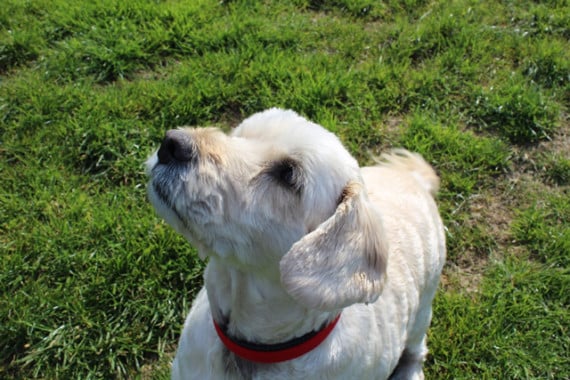
At the moment we have a delightful small- to medium-sized dog with us called Toby, who is a 10-year-old West Highland terrier cross cocker spaniel.
He is very sweet natured and loves a fuss, and he likes to be the centre of attention.
He’s used to getting his own way and so his new owners will need to have patience and take time to change some of his habits, in particular his possessiveness over food.
He came to us for rehoming because his elderly previous owner, who had had him from being a puppy, has failing health and she simply couldn’t look after him properly any more.
He deserves an equally loving new home, where he can be taught a few boundaries and polish up his manners!
A plea - watch and wait
This is the busiest time of year for us, when we are inundated in particular with calls to rescue baby birds.
But most fledglings don’t need to be rescued, and in most cases these youngsters have not been abandoned by their parents who are, in all likelihood, waiting nearby until the coast is clear of humans.
Fledglings leave their nest about two weeks after hatching, just before they can fly.
They will have grown all or most of their feathers and are very mobile and can walk, run and hop on to low branches.
If you are worried about a young bird go right away from the site and return in an hour or so.
You will almost certainly find that the natural parents have taken care of their offspring. Young birds that are in immediate danger from a predator or traffic should be picked up and placed away from harm, a short distance away where their parents can locate them.
No matter how hard we try, we cannot look after baby birds as well as their parents can.
However, if you think a bird is genuinely orphaned or sick, please take it either to your nearest vet or bring it to us.
Comments
This article has no comments yet. Be the first to leave a comment.