
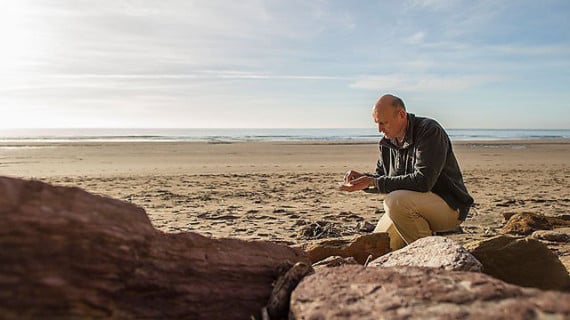
The scientist who first identified microplastics did so while a student at Port Erin’s marine laboratory.
Professor Richard Thompson spoke about his ’Life Scientific’ on Radio 4 recently.
Presenter Jim Al Kalili introduced him as the scientist who ’alerted the world to the vast and growing quantities of microplastics in the ocean and the harm they might cause to sea life’.
In the programme, Professor Thompson described how he got ’hooked’ on plastics while studying for a PhD on marine molluscs and limpets at Liverpool University’s island research base.


.png?width=209&height=140&crop=209:145,smart&quality=75)
He said he spent ’four very happy years’ in the island.
During that time he found lots of plastic litter in material for his experiments; he also became involved in organising beach cleans and ’clearing marine litter got me hooked on plastics’.
’It struck me a lot of effort and energy went into big items, but not a lot went into small items,’ he said
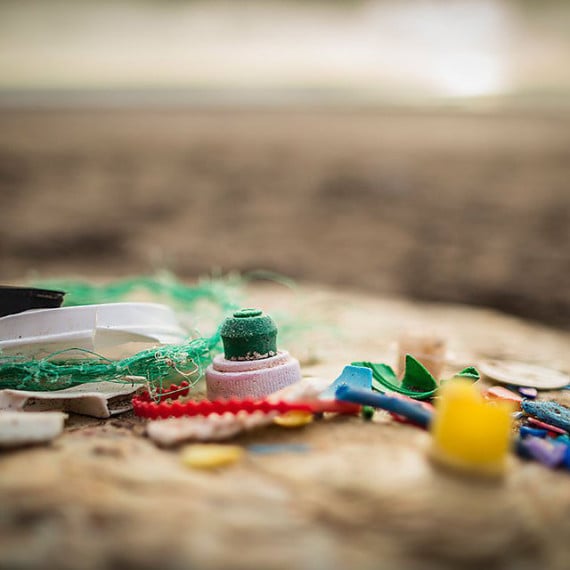
When he began teaching at Plymouth University - where he is head of the International Marine Litter Research Unit - he set students the task of finding small pieces of plastic and found pieces the size of a grain of sand.
He wrote what has become a landmark paper: ’Lost at sea, where is all the plastic?’ which asked whether these small items could explain why the increase in plastic was not reflected in the amount of larger plastic litter.
To prove the hypothesis he analysed the amount of plastic caught in fine nets (that had been used in previous experiments back to the 1960s to monitor plankton) and compare the data over the decades.
His paper resulted in inquiries from all over the world. ’We had gone smaller than anyone else,’ he said.
He sought funding to investigate harm caused by these microplastics. Their laboratory tests show smaller pieces of plastic cause harm.
Research
He described how Japanese research showed persistent organic pollutants concentrate on plastics.
The question Professor Thompson asked was once ingested does plastic release its chemical load?
They also considered the impact of plastic containing chemical additives.
’We are still trying to fully understand the potential impact of microplastics,’ he said.
’It’s clear from our laboratory studies there is evidence of harm but that is at a higher concentration than in the natural environment.
’If we carry on with business as usual we will reach harmful levels in the next 50 to 100 years.’
It is ’highly likely’ there are microplastics in our food and they are in a third of the fish from the English Channel.
He said he is ’not concerned at the moment about eating fish.’
However he added: ’It’s a warning for the future we need to use plastics more responsibly. I firmly believe it’s a problem within our grasp to fix.’
One area Professor Thompson’s research has already had an impact in is removing plastic microbeads from cosmetics.
He has also advised government on single use plastic bags.
In 2014, Professor Thompson presented his research to the then US Secretary of State, John Kerry, at his Our Ocean meeting in Washington.
And he was awarded an OBE in 2018 for services to marine science.
He said plastic is a useful material in modern life but ’we need to use plastics more responsibly.
’We as consumers should not be faced with an ethical challenge when we visit the supermarket and should know the packaging is as minimal in its environmental footprint as possible.’
Comments
This article has no comments yet. Be the first to leave a comment.