
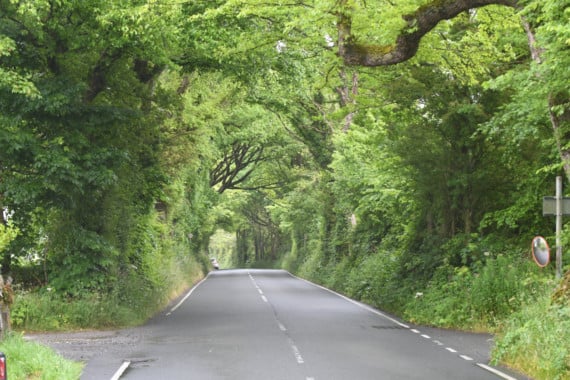
Manx National Heritage has weighed in as the controversy over a planning application that would entail the felling of 25 elms.
Thousands of people have signed a petition demanding that the trees, in the south of the island, be preserved.
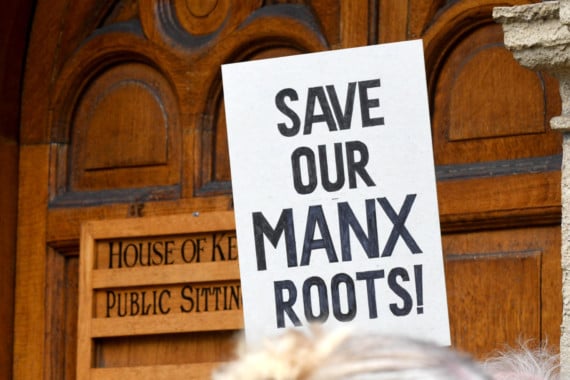
Dozens of people also took part in a demonstration outside the House of Keys this week about the issue.
MNH points out that the summary description of this planning application, which is made public, is for the creation only of a new vehicular access.
.png?width=209&height=140&crop=209:145,smart&quality=75)


’This is ambiguous and did not highlight that the proposal included the felling of a number of trees, including the elms, along the A26 at St Mark’s, nor any construction - a 100-metre track, a gateway, nor an entrance affecting another field on the other side of the road,’ a statement from the ogranisation says.
Based on the summary description MNH did not investigate the application in detail when it was published in November 2020.
The MNH statement says: ’In hindsight, this was regrettable and the fact that it has only been brought to our attention in June 2021 is unusual.’
The elms that line sections of the road at the Braaid are believed to be disease-free and therefore provide a significant contribution to the island’s biodiversity, MNH says.
The elms are protected under the Isle of Man Tree Preservation Act 1993, but have lined this stretch of road for many years prior to their registration.
MNH’s research suggests that they were planted in the mid-1800s as a deliberate act of landscaping along a new road probably only dating from the late 18th century.
’Their longevity, size and endearing shape can transform elms into features in their own right, which is possibly why they have such cultural significance,’ the MNH statement says.
’It appears that no actual evidence was presented to support the claims that the trees present a threat to road safety.
’Neither does the application demonstrate that consideration has been given to any alternative initiatives which could improve highway safety.
’Presumably traffic calming measures would increase road safety along its entire length, yet no such measures or roadside mirrors appear to have been considered.’
Edmund Southworth, director of Manx National Heritage, said: ’MNH does not support the felling of healthy, mature trees unless it is proven that the need for their removal is substantial and unavoidable.
’Due to Dutch elm diseases, which started to affect Manx trees in the mid-1960s, over half of the elm population has already been lost from the island.
’We would always urge that alternatives to tree removal are thoroughly researched and considered. The situation at St Mark’s seems to suggest that there are flaws in this aspect of the planning system which needs to be reviewed as a matter of urgency.’
He added that MNH welcomed the intervention of our close colleagues at the Manx Wildlife Trust and Minister Geoffrey Boot’s upcoming discussions with the landowner.
’We offer our full support to finding an alternative solution to felling trees that form part of this valuable ecosystem and historic landscape feature,’ Mr Southworth said.
’We hope this case can be used as a catalyst to help improve the way the natural environment is properly identified and considered within future planning applications, ensuring wildlife, habitats and trees are fully considered and protected within our island Biosphere.’
To read more about the protest this week, see the Manx Independent, which is on sale now.
Next week’s Isle of Man Examiner will look at the effects ash dieback is having on the island.
Comments
This article has no comments yet. Be the first to leave a comment.