
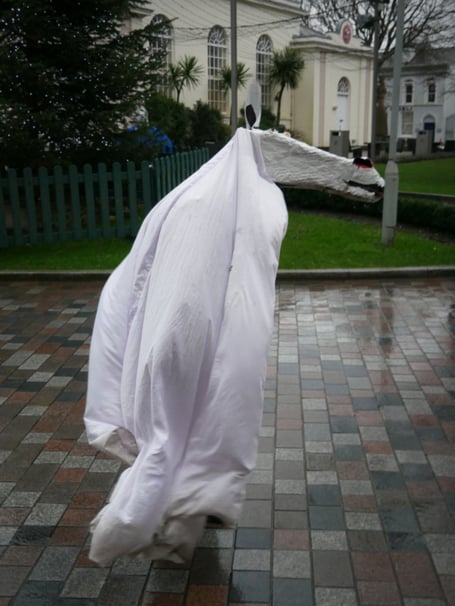
A mystery remains unsolved from the recent traditional Manx Christmas celebrations.
Who was the Laare Vane?
This white horse, with papier-mâché head and a body covered in a white sheet, was seen a number of times at Manx events in December, but it remains unknown who was behind it.
James Franklin of Culture Vannin said: ’We have no idea who it was, but this appearance of the Laare Vane is the return of an anarchic and wonderful part of the traditional Manx Christmas.’
.jpeg?width=209&height=140&crop=209:145,smart&quality=75)
.jpeg?width=209&height=140&crop=209:145,smart&quality=75)
.jpeg?width=209&height=140&crop=209:145,smart&quality=75)
.jpeg?width=209&height=140&crop=209:145,smart&quality=75)
Records dating hundreds of years describe festive meals being interrupted by this ’White Mare’ - as the Manx translates. It would snap its jaws at the guests and cause a playful ruckus until it was chased out.
The Laare Vane first appeared at the Ramsey performance of the White Boys, a 200-year-old play about saints fighting, dying and being resurrected to dance and sing.
The horse surprised actors and audience alike by trotting into the play after the concluding sword dance.
The Laare Vane grew more confident by the Douglas performance, where it trotted in to sniff at the actors as they played dead saints strewn on the ground.
Perhaps the biggest laugh of the performance came when one unfortunate person was caught unaware by the horse and let out a loud scream which had actors and audience laughing alike.
The Laare Vane was also seen at Hunt the Wren in Ramsey, where it cantered around the dancers.
On both occasions the horse appeared unannounced and disappeared without warning, not speaking to anyone.
Mr Franklin added: ’It is marvellous that someone has decided to revive this Manx tradition. They appeared to have great fun with it and we hope that we will get a chance to see them again next year, whoever they are!.
One of the best historical accounts of the Laare Vane comes from A. W. Moore’s Folk Lore of the Isle of Man (1891):
’[â?¦] During the supper the laare vane, or white mare, was brought in. This was a horse’s head made of wood, and so contrived that the person who had charge of it, being concealed under a white sheet, was able to snap the mouth. He went round the table snapping the horse’s mouth at the guests who finally chased him from the room, after much rough play.;
This was common in the late 19th Century, but it died out as an active tradition at the start of the 20th century.
It was revived in some form in the 1970s when it accompanied performances of The White Boys on Manx streets, but it has not been seen for decades.
Comments
This article has no comments yet. Be the first to leave a comment.