
Having a disease is bad enough, but having a rare disease is even worse.
There is a lack of support on every level - practical, financial, emotional, medical and governmental - compared to that given to those with more mainstream conditions, writes Mel Wright.
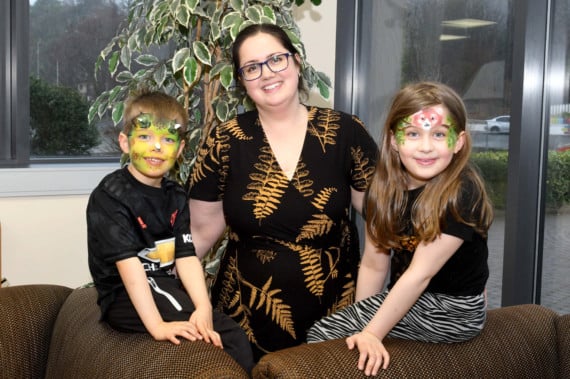
That’s the experience of Natassja Chadwick, whose two children have Erythropoietic protoporphyria (shortened to porphyria), meaning they are allergic to UV rays from sun and artificial light.
UV triggers a chemical reaction in the blood affecting the skin and internal organs.

~2-(1).jpeg?width=209&height=140&crop=209:145,smart&quality=75)
-(1).jpeg?width=209&height=140&crop=209:145,smart&quality=75)

To raise awareness of the plight of sufferers of rare disease such as albinism and spina bifida, and their families - of which there are 15-to 20 in the island - Natassja and Kelly Quaye, whose son has fragile x syndrome, have formed a support group Isle of Man RARE.
To mark Rare Disease Day on Saturday there is a disco and the Tower of Refuge, Pulrose power station and Ramsey swing bridge will be lit up blue.
Natassja first realised that her daughter Madison, eight, had a problem when she was two years old.
Madison complained bitterly of painful skin after being in the sun.
It took three years to get the diagnosis.
Her son, Isaac, two years younger, also has the disease.
Since then, Natassja has battled on all fronts to improve her children’s lives.
It is a huge struggle and she hopes her experience will open pathways and - through information shared in the group - make it easier for others.
’We don’t have the resources in the island,’ said Natassja.
’There are more people with rare diseases in the island, because of the gene pool and they are hereditary conditions.
’For porphyria there is the same number here as in the whole of Wales.
’People tend to stay in the island. The condition is down to a faulty gene.
’You need two parents with it, which myself and my husband have.’
There is very little advice because it’s so rare.
The British Porphyria Association give advice on what to do.
But it has been ’a fight for the right to medical care’ Natassja said.
Getting advice and being able to follow it are two separate things.
’What works in England doesn’t work in the island,’ she said.
’You can get windows to stop UV rays.
’In England a department can check if they are safe and there is a grant.
’That doesn’t happen over here.’
Natassja added: ’My GP was ringing different departments.
’They were all saying "that doesn’t come under us". They would find a loophole.
’That’s why we formed a group. I have made hundreds of phone calls. Every other parent [of a child with a rare condition] has the same experience.’
She said that government has been ’disappointing’ and that it took ’a long time to get finance approved to see a London specialist.
The battle rages in accommodating the children at Victoria Road School, in Castletown.
Natassja managed to get special non-UV lighting in Madison’s classroom.
But she said that controlling other children’s reactions has been challenging.
For protection, Madison and Isaac both wear hats, gloves and long trousers even on the hottest days, attracting attention
’My daughter has anxiety.
’They are prone to bullying and school is not very supportive in getting help.’
’Once I find anyone to help I’ll let everyone in the group know.
’I want to ensure their children know who to ask.’
She added: ’School is supportive as much as health and safety allow, but they can’t even put sunscreen on Isaac.
’The amount of times I get them from school and they have no hat. I’m not being over-protective. This is a serious condition.’
There are treatments to alleviate the condition.
But they would either require trips off-island several times a week or be so expensive - £100,00 for one year for both children - to make them unrealistic.
The group shares information and gives support. ’It’s being able to talk and know you are not alone.
’People understand frustration with doctors, hospital, government. It makes you feel less alone.’
A spokesman for the Department of Education, Sport and Culture said that it is always looking at ways to best protect vulnerable children in schools and takes allegations of bullying seriously.
Any concerns should be taken up in the first instance with the headteacher, who has responsibility for both the school’s anti-bullying policy and Health and Safety.
â?¢ A disco to raise funds for the British Porphyria Association is this Saturday, February 29, from 6pm to 8pm.
Tickets cost £1 and will be available on the door.
For more information on Isle of Man RARE see the Facebook page or phone 423341.
Comments
This article has no comments yet. Be the first to leave a comment.