.JPG?width=94&height=94&crop=1:1,smart&quality=75)

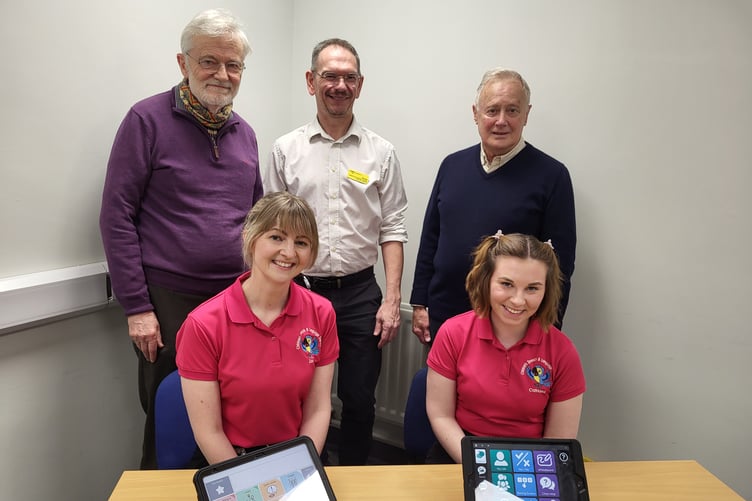
A £33,000 grant has been awarded to the island’s Speech and Language Therapy Service to fund new communication technology for children and adults who are unable to speak.
The funding has been provided by the Henry Bloom Noble Healthcare Trust and will enable the service to purchase 30 iPads along with specialist communication software.
The equipment will be used to support people who cannot vocalise because of serious disabilities or progressive medical conditions.
Duncan Brown, clinical lead for the Speech and Language Therapy Service, said the devices would help deliver what is known as Alternative and Augmentative Communication - often referred to as AAC.
.jpeg?width=209&height=140&crop=209:145,smart&quality=75)


‘AAC, or Alternative and Augmentative Communication, is the term we use to describe methods of communication that can supplement or replace speech and writing when these are impaired,’ he said.
‘This need can occur at any stage of life. Everyone has the right to receive the support they need to communicate, be understood, and reach their full potential.’
The iPads will be fitted with specialist AAC programmes, including Grid and Proloquo2Go, which allow communication systems to be tailored to individual users.
Mr Brown explained that the software enables people to access vocabulary, symbols and phrases which can then be translated into a spoken voice. This allows users to express their needs, wishes and personality in what he described as a ‘meaningful and authentic way’.
The devices will be used by therapists to assess communication needs and to design personalised programmes of support. They may also be offered on a short-term loan basis, allowing individuals to use them at home or, in the case of children, in school settings.
Mr Brown said the technology could support both short-term and long-term rehabilitation.
‘For some people, speech may be regained quickly, while others may recover more gradually over time. These iPads can support both short-term and long-term rehabilitation, adapting to each individual’s changing needs,’ he said.
He added that the equipment could play an important role in promoting independence.
‘Everyone has the right to live safely and independently in their own home. For someone who cannot verbalise, hearing their request spoken aloud through an iPad using a meaningful voice can restore a sense of choice and independence.
‘It also provides reassurance for carers, who no longer need to constantly monitor for non-verbal cues.’
Terry Groves, chairman of the Henry Bloom Noble Healthcare Trust, said advances in medical technology were both exciting and costly, but described the iPad project as a practical solution.
‘The changes and opportunities new technologies bring to medicine and health care today, and tomorrow, are quite staggering – and as we know from the approaches we receive regularly, very exciting and very expensive,’ he said.
‘But here we have been able to help fund with simpler technology, iPads and software, solutions for the obviously very skilled and caring Speech and Language team in Manx Care to employ, at modest cost, to help children and adults who might otherwise be left in a very sad and silent world.
‘It is fantastic and we are delighted to have been able to assist in this project, now a real programme of help to many.’