

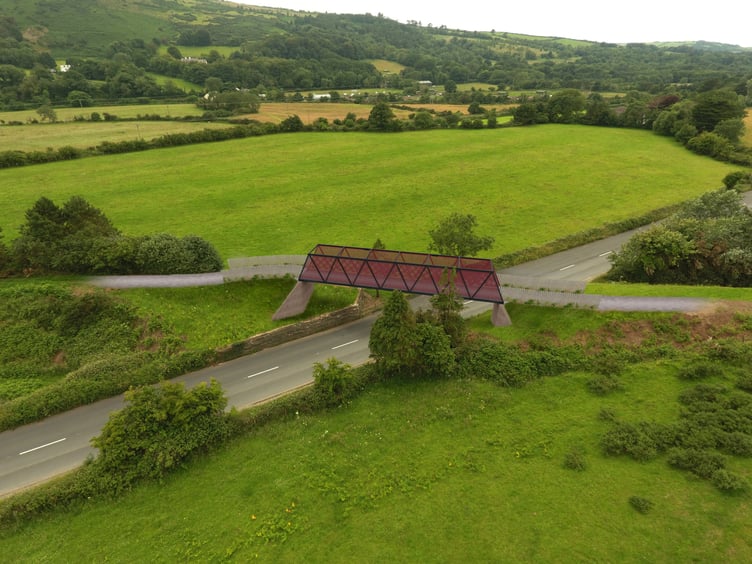
The government has said that it is not in the financial position to reinstate bridges on some of the island’s former railway lines.
This was included in Council of Ministers’ response to a report on the government’s Active Travel Strategy.
In 2020, the Department of Infrastructure issued plans for the reinstatement of the former railway bridges on the trail from Douglas to Kirk Michael at Glen Wyllin, Glen Mooar and across the A1 near Ballaleece, St John’s.
The project was forecast to cost £1.3 million, yet since, it has been put on the backburner.


.jpeg?width=209&height=140&crop=209:145,smart&quality=75)

A recommendation made in the review said that reinstatement of the Heritage Trail bridges is worthy of serious reconsideration; and that both the Department of Infrastructure and the Department for Enterprise should explore options.
Commentary from Co-Min said that upgrades to the Peel to Douglas Heritage Trail were to be funded as a separate project not as part of the Active Travel Strategy.
This they say is because the purpose of the trail is as a leisure route.
In the response it said: ‘Government would be open to future projects. However, it must be recognised that the island’s fiscal position is challenging for the foreseeable future.
‘The Heritage Trail bridges is worthy of serious consideration when finances allow.
‘Both the Department of Infrastructure and the Department of Enterprise should cost and prioritise maintenance and investment options for the island’s long-distance footpaths, bridleways and green lanes.’
Earlier this year a review into the 2016 to 2021 programme to increase active travel was published.
The Active Travel Strategy provided a framework to encourage people in the island to make regular everyday journeys by more active means, such as cycling or walking.
The Department of Infrastructure set a target of ‘increasing the participation in active travel from 14% in 2011 to 30% in 2025, with an interim target of 20% in 2020.
The aim is that issues identified in the review will be considered for the upcoming 2023 to 2028 active travel policy and strategy.
The review, undertaken by Tynwald’s environment and infrastructure policy review committee, revealed issues of funding into the scheme.
In 2018, when the initiative started, £3.8 million was approved by Tynwald to support delivery, which was reduced to £2.5 million in the 2021 budget. The department confirmed to the review committee that £2,507982.79 was spent on the active travel initiative.
In the 2022 budget, £15,000 was allocated to active travel, with the review stating: ‘It is apparent that substantial funding was discontinued in 2021 when the strategy came to the end of its lifecycle.’
In July 2022, the department stated that work related to active travel is ongoing, and Co-Min’s response stated an intention for continued investment in active travel.
The report will be considered in May’s sitting of Tynwald.
Comments
This article has no comments yet. Be the first to leave a comment.