

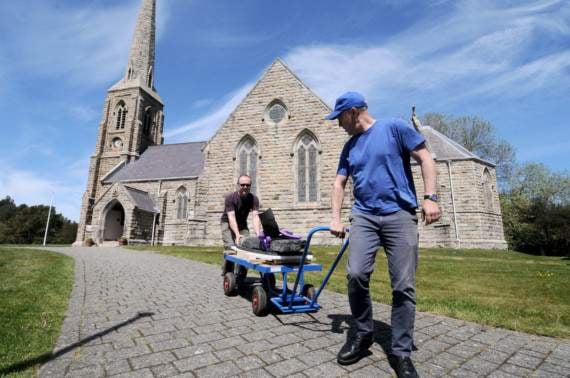
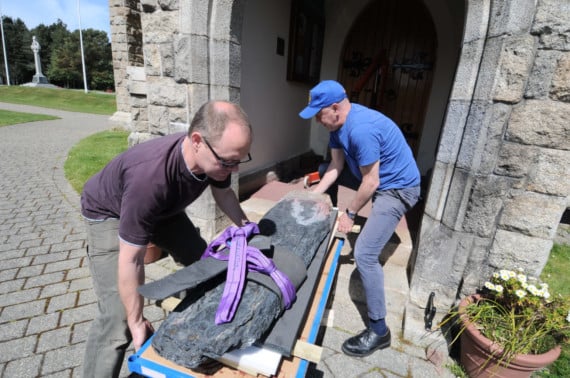
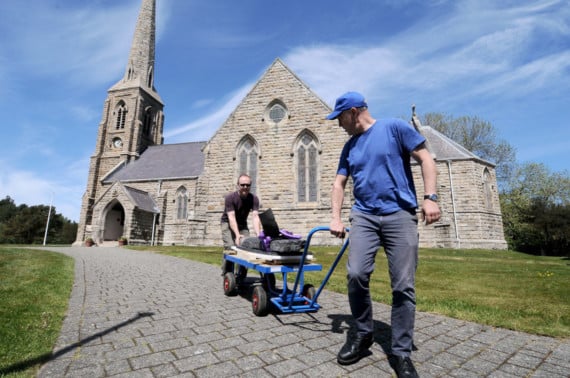
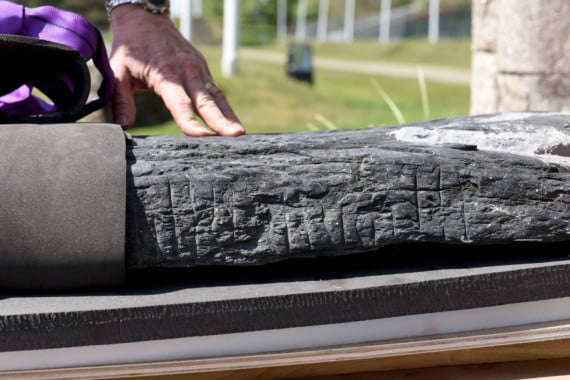
A 1,000-year-old Manx cross slab has been moved from its home in St John’s chapel for restoration.
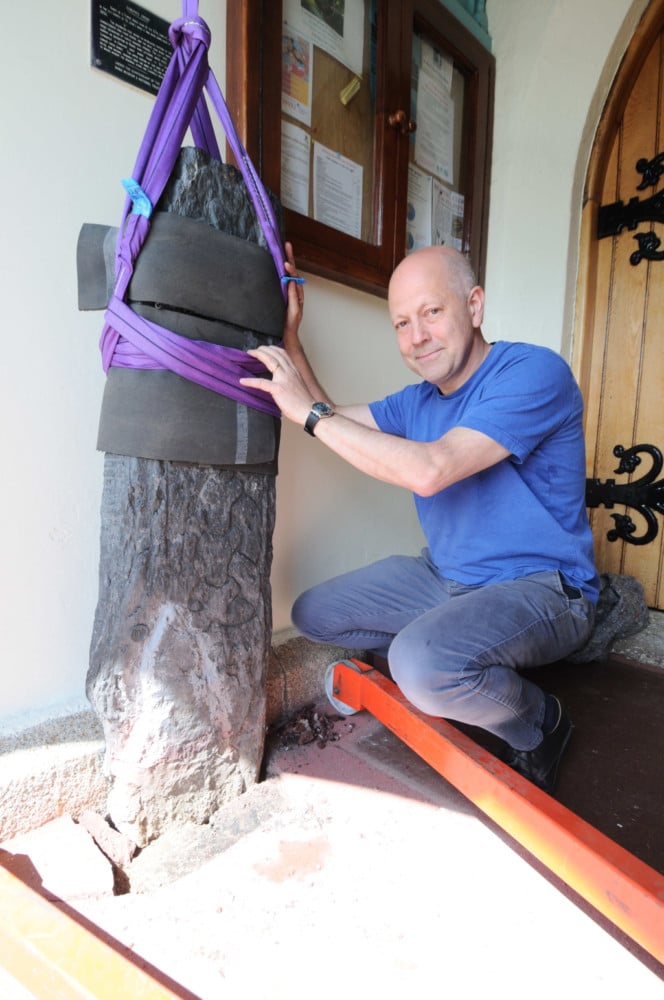
The 10th century cross has been on display in a porch at the Royal Chapel since this was built in the 1840s, writes Adrian Darbyshire.
But a review of the 200-plus Manx crosses found it to be the one most at risk - because of the fragility of its stone but also on safety grounds as it had become dangerous unstable.
It has now been taken into storage at the Manx Museum for cleaning and conservation before it is returned to St John’s, to a new location inside the chapel.



.jpeg?width=209&height=140&crop=209:145,smart&quality=75)
The cross bears a decorative ring chain motif on the front and an incomplete runic inscription on the side, which reads: ’but Osruth carved these runes’.
Andrew Johnson, inspector of ancient monuments at Manx National Heritage, said Manx crosses provide the only written record of life in the island in 10th and 11th centuries.
He said: ’Manx crosses are really special. We have about 200 of them and of those 40 to 50 have this very intricate form of decoration on them and perhaps 25 have runic inscriptions.
’What is really exciting is when they have a person’s name on them. We see an interesting mix of Norse and Celtic names. These are bereft family members and people these are memorials to and, as in this case, sometimes the individual who carved to the stone.’
The cross slab is far from complete. At one point its circular head was broken off and the stone dressed for use as a lintel in the old chapel that existed on the site of the present Royal Chapel.
It dates from a time when the Isle of Man was ruled by the Norse.
There were Vikings in the Irish Sea from the end of the 8th century. They used Dublin as a trading post but they didn’t start settling in the Isle of Man until the beginning of the 10th century.
Many of cross slabs depict scenes from Scandinavian mythology including dragons and other beasts. The transition from paganism to Christianity was more fluid and complex than previously thought.
Chris Weeks, collections care and conservation manager at MNH, explained that MNH, as guardian of ancient monuments, has been working over the last five years to document the Manx crosses and establish their condition and exactly who their legal owners are.
Osruth’s cross was deemed most a risk out of the 210 documented.
He said: ’This kind of stone is peculiar to the island. It looks like slate but rather than neat sheets it has lots of weaknesses and chunks tend to fall out. It was also loose in the ground - somebody may have fallen against it. It had a become a safety risk.’
Chris’s job will be to clean the cross and remove a botched repair carried out at some point in the past. Fixitive will be used to shore up the fragile stone.
The team at MNH will be also be working to interpret the cross. Even they have yet to see what is on the back of the stone which has been hidden against a chapel wall from a century and a half.
They also want to get some clues as to how tall it once stood and the dimensions of the missing head of the cross slab.
’This gives us an opportunity to look at it closely in a way that’s not possible in the porch of a church,’ said Chris.
Asked if it will go back on display in the Royal Chapel, Chris replied: ’Absolutely but it’s yet to be decided exactly where.’
Manx crosses date from between the 6th and 12 centuries. Incredibly, they are still being found at a rate of about one every two years.
Andrew has himself being involved in the discovery of 10 of them, the most recent being one he found in Patrick about three years ago.
The St John’s cross slab is owned by the Crown. Many others found around the island are owned by the church or private landowners. In some case, ownership is not clear cut.
Some are under cover, others in shelters and other again in fields or private gardens.
There are sensitivities involved, then, in ensuring their conservation and managing risk. Moving the cross slab from the Royal Chapel was only done following approval from all stakeholders. Chris said it was important to bring everybody on board and wait for opportunities to arise.
Andreas Church, for example, home to a number of the best-known Manx crosses, is looking to refurbish the interior of the church. They are planning to move the crosses and trying to work out the best way to achieve that.
And Maughold church has approached MNH with an idea to improve the shelter that’s home to 46 crosses, more than anywhere else in the island, but is now in a poor state of repair.
Comments
This article has no comments yet. Be the first to leave a comment.