

For children and young people living through a pandemic will impact their future in ways which mental health experts predict will last for years, writes Helen McKenna.
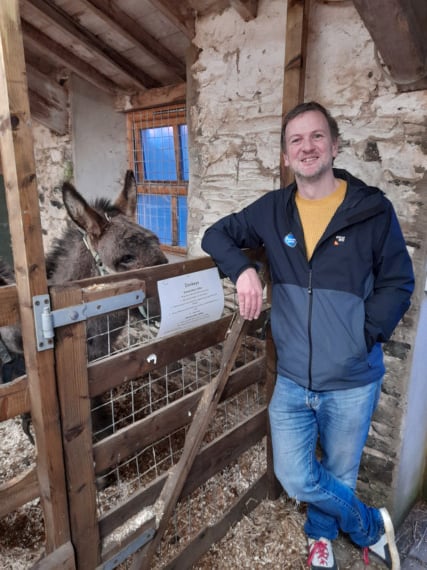
The Children’s Centre, a charity based at Wallberry Farm in Douglas, has been ensuring teenagers’ wellbeing is looked after both during lockdown and beyond.
It offers services including a community farm, adventure-based activities both indoors and outdoors, and learning support for young people aged 16 and above.
Joff Whitten is the head of the centre and has more than 25 years of experience working in relevant projects across England. He started working for the charity in 2019 and heads a team of 23 staff.

.jpeg?width=209&height=140&crop=209:145,smart&quality=75)
He said: ’Even if lockdowns around the world and vaccinations are completed and the world goes back to "normal" in six months, the impact of this period of time will be profound.
’For those in their later teenage years, this will become prevalent in how kids process information and how they adapt to society around them. Not to be a doomsayer, but there are worries about xenophobia and things like that, because there’s a view by some that people from "across" have bad things [carry the virus].
’You don’t know how that will impact a teenage mind. They might lock into a smaller version of the world, where it [the world] is only there in front of them and nowhere beyond.’
Joff said the education system was under strain.
’It’s really worrying,’ he said. ’Everyone’s trying their hardest to get through it, but we’ve got to keep a careful eye on the schools and the kids as they’re having a torrid time.
’They’ve got a lot of work to do. Schools are really stretched because of complications around staffing and budgets and aren’t able to give extra support to children.’
The charity aims to help children and young people on a one-to-one, weekly basis, with about 600 people requiring its services per year.
Joff said: ’We work long-term, that’s our principle. We help kids who aren’t getting help elsewhere. There are services such as the Child and Adolescent Mental Health Service (CAMHS), there’s schools and then there are kids in between those two establishments, who aren’t quite unwell enough to be in the care of CAMHS but they’re not well enough to be in school. It’s a growing area.
’One of the principal things we do is using a continual contact on a week-by-week basis, which is really important for us.
’When lockdown happened, we tried to adhere to a session per week via video call or phone call. If we could, we could have additional virtual working.
’One of my favourites was young people who made a virtual Minecraft version of the community farm, which is a positive game and uses maths, planning, processing and exploration.
’There were "give and take" games, such as Consequences. It was more about keeping things positive and consistent.’
Joff said the majority of the people they work with have mental health challenges.
He said: ’We do targeted work on domestic abuse, as unfortunately, statistics on domestic abuse over this period of time were horrible.
’The kids are impacted by it and, even though parents are eligible for support, it’s the kids we want to help as well as statistically it’s terrifying the impact domestic abuse can have on the wellbeing of a child growing up and the instances of terrible behaviours as a result.
’We work in partnership with Victim Support IoM and Isle Listen, trying to find a therapeutic approach as well as practical for "naughty kids".
’Social prescribing is the method we use here, for instance, if you’ve got an anxious kid, rather than just talking to them, let them hit pieces of metal in a forge for a while and they can create a metal ingot. Some kids might hate school but suddenly, by putting the practical in front of them, they can enjoy learning.’
Joff said the charity was getting more referrals coming out of lockdown.
’We’re being inundated by people who want extra help, as there are kids who are scared to go back to school, who might want to wear a mask all the time, lots of anxieties are coming out,’ he said.
’There are some kids who have given-up, such as 15- and 16-year-olds who don’t see the point in going back to sit their GCSEs. It’s going to be a big challenge to try to find meaning and a purpose for those kids and, if we don’t nourish and look after them, in a few years’ time we are going to have a lot of very dysfunctional young adults who won’t be interested in participating or being part of communities.
’It’s a real worry and I think it’s our responsibility.’
When asked what age groups are most affected, Joff said: ’It’s the middle teenage years that have been impacted a lot, because of the GCSE cancellations at this point.
’In the last lockdown, the Year 6 to Year 7 age group [10- to 12-year-olds] was impacted. It’s always a difficult one, due to it being a transitional year from primary to high school, but they didn’t finish primary school properly. It was a huge challenge for them to process.
’I know a lot of teenagers getting to the end of their studies, completing their A-levels and they’re worrying about whether or not university is a sensible idea, or do they defer it for a year. Worrying about whether jobs going to exist, as the economy are in a great sense of flux.’
He added: ’The big thing we try to encourage is patience because if you can put yourself in someone’s shoes you can try to understand where they might be coming from, giving breathing space.
’Trying to understand why young children are in an emotional crisis is important, as youngsters can lash out at whoever is directly in front of them, as they can’t process their feelings and their emotional intelligence isn’t as developed.
’It is likely that every child is going through something complicated, even if they’re not exhibiting obvious signs of mental health challenges.
’Space to talk is important - we live at 100 miles an hour these days, now the lockdown’s over people are going straight back to work to get an income. If you can find a tiny bit of space for talking it will make a huge difference.’
Joff explained the importance of creating a space where children and young people can be themselves. ’We’ve got a lovely sense of relief from kids coming to us again,’ he said. ’We get some comments from them saying that it’s the only place they can really be themselves. One said that it’s the only place they don’t have to wear a mask, which is heartbreaking but for us. It’s heartwarming because that’s our intention, to create somewhere where children can feel like they belong.’