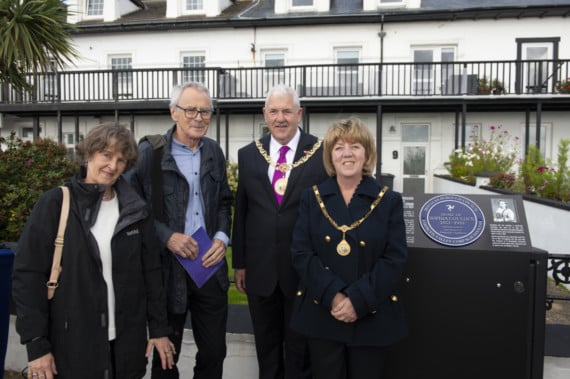
A blue plaque honouring women’s rights pioneer Sophia Goulden was unveiled on Friday, at the Douglas home where she died more than a century ago.
Douglas Mayor Jon Joughin unveiled the plaque at the house in Strathallan Crescent, to which the Manx women’s suffrage activist retired with her husband. She died in 1910.
Sophia Jane Goulden, *ée Craine, was born in Lonan in 1833. In 1853 she married Robert Goulden at Kirk Braddan and the couple moved to Manchester, where their 11 children were born, among them Emmeline Pankhurst.
Mr Joughin thanked the current house owners, Jamie Sutton and Paula McClean, and their family - teenage sons Adam and Dylan and one-year-old Emmeline - for their cooperation in allowing the public ceremony to be conducted outside their home. Aware of the house’s history, Jamie and Paula named Emmeline after Sophia’s famous daughter, who led the suffragette movement in the UK.




Sophia’s great-grandson Michael Goulden and his wife Catriona Graham were among the guests present for the ceremony, as well as councillors and MHKs, plus representatives of the Friends of Sophia Goulden movement, which is campaigning for a statue to be erected in her honour in the Isle of Man.
Mr Joughin described Sophia Goulden as ’a woman with a vision of a world where women could enjoy equal political rights’.
Her influence helped to advance the campaign for women’s suffrage and inspired her daughter Emmeline to become leader of the British suffragette movement.
He added: ’That this is only the fourth blue plaque the council has commissioned shows the level of importance the council places on Sophia Goulden’s contribution to advancing women’s rights.’
The plaque would accord Sophia lasting recognition and serve as a ’beacon to inspire others to continue her pioneering work.’
Emmeline Pankhurst’s passion for women’s rights was sealed when, at 14, her mother took her to her first public suffrage meeting to hear Lydia Becker, founder of the Women’s Suffrage Journal who also joined a campaign for the right of women to vote in the House of Keys.
In 1881 Tynwald became the first national parliament to give some women the right to vote in a general election.In 1918 Westminster passed an Act of Parliament according women similar rights.
Comments
This article has no comments yet. Be the first to leave a comment.