
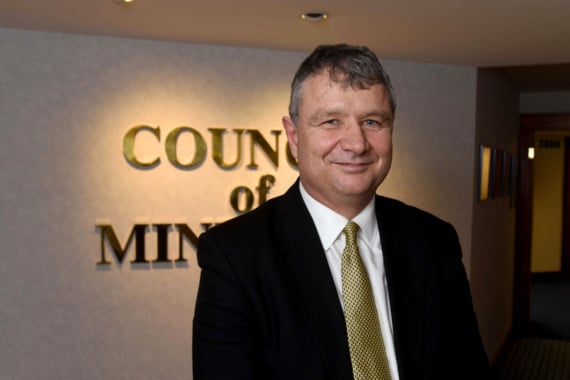
Two thirds of new homes are built on brownfield sites or are property conversions.
That figure was revealed in a statement by Policy and Reform Minister Chris Thomas.
He noted how in the years 2007-2017, there were 2,528 planning approvals for new homes, of which 1,100 were brownfield sites (44%), 552 were conversions (22%) and 876 were greenfield (34%).
Mr Thomas said: ’People may be surprised by the figures, as there is a perception that most new houses are built on greenfield sites.
.jpeg?width=209&height=140&crop=209:145,smart&quality=75)
.jpeg?width=209&height=140&crop=209:145,smart&quality=75)
.jpeg?width=209&height=140&crop=209:145,smart&quality=75)
’The evidence demonstrates otherwise, especially in the east and north.
’Brownfield redevelopment is targeted and is taking place, but additional zoning of greenfield sites will be needed in the years ahead.’
However, while the redevelopment of brownfield sites is positive for the island, it still leaves over a third of new homes being built on greenfield sites.
Greenfield site development goes ahead despite prominent brownfield sites being frequently highlighted as needing development.
These include Douglas sites such as the former Park Road School site, Victoria Road prison, Villiers Square, Lord Street and Middlemarch.
In October 2017, a public consultation was held on an action plan to improve the planning system in which the public said they wanted more done to develop brownfield sites, while protecting the countryside.
Mr Thomas’ statement outlines that while brownfield sites are being targeted for development, some ’greenfield sites will be needed in the years ahead’.
In his statement, he outlined 552 conversions to ’new’ homes in the period 2007-2017.
Zoning
Of this, 231 (55.66%) were in the east of the island, of which 172 were in Douglas and 137 of which were former hotels.
Despite Mr Thomas’ statement, the government has been regularly criticised for not acting sooner or firmly enough by leader of Douglas Council David Christian.
He has called for the government to use compulsory purchase powers on sites where there has been little or no development for prolonged periods.
Subject to Tynwald approval, the government can use compulsory purchase powers if a deal cannot be reached with the owners of a site deemed to be important to the national interest.
Mr Thomas added: ’Bringing brownfield sites back into the more socially and economically productive use has to be a good thing for everyone and for the place itself.’
He provided a few examples of where the brownfield regeneration has been used, including Woodville Terrace and South Quay in Douglas.
He concluded by saying if sites are not for immediate development, they can still be useful to the community, citing the former Farmer’s Arms site in St John’s which is now the 2018 Year of our Island garden.
Comments
This article has no comments yet. Be the first to leave a comment.