

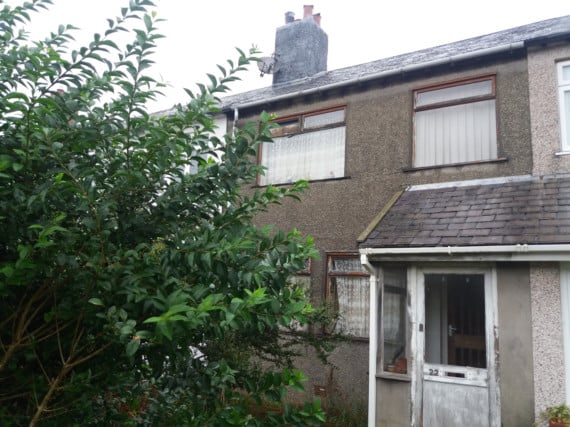
There are 664 long-term vacant properties across the island, a Cabinet Office report concludes.
The report follows a review of figures compiled during the 2016 census which found that 6,470 properties were vacant.
Critics of government’s plans for an extra 2,440 houses to be built in the east of the island have seized on that 6,470 vacant homes figure.
But a report compiled by the Cabinet Office’s economic affairs division suggests the figure for long-term vacant properties is much lower.

.JPG?width=209&height=140&crop=209:145,smart&quality=75)
.jpeg?width=209&height=140&crop=209:145,smart&quality=75)
It points out that the census did not collect information on why these properties were vacant, meaning that they may not have been available to buy or rent.
It might, for instance, have beenï?·unfit for habitation, under renovation, or lived in by someone admitted to hospital for a long period.
Equally, it might have been for sale or let, used as a summer residence or held as an asset or was part of a deceased person’s estate.
And as the census is a snapshot in time, three years on, properties that were vacant on census night in 2016 may no longer be so.
The economic affairs division looked at anonymised electricity consumption data supplied by Manx Utilities to provide extra information on whether those properties continue to be vacant.
Using data from April 2017 to the end of September 2018, and October 2018 to the end of June this year, and matching this with the unique property reference number used in the census, it concluded that 664 properties across the Isle of Man had used no electricity in that period, or had no meter fitted.
This was the case with 338 properties in the area covered by the draft Area Plan for the East.
For the whole island, 328 of the 664 properties considered as long term vacant were houses (49%), 299 were flats (45%) and 36 (5%) were bungalows.
If you define vacant properties as those using 99kWh or less of electricity, then the number rises to 2,368, equating to a vacancy rate of 5.6%.
Policy and Reform Minister Chris Thomas, in his introduction to the report, notes: ’The data does show that the Isle of Man, like many other places, does have some properties which have been vacant for a long time, but this is a significantly smaller issue than has been suggested, amounting to 664 properties.
’Monitoring the number of vacant properties continues to be a challenge outside of the census.’
The report notes, however, that it was not possible in all cases to obtain matched data between the census vacant properties and the Manx Utilities’ database, with 831 properties (12%) not being matched.
These properties were excluded from the analysis which only therefore applied to 5,639 properties across the island vacant on census night in 2016.
Comparing the census figures, the vacancy rate in 2016 of 15% was slightly up on the 14% of 2011, but was nearly double that of 2001 when the rate was 8%.
Of the 6,470 properties shown as vacant in the 2016 census, Douglas had the highest number at 2,430 but the highest vacancy rate was in Rushen at 21%, followed by Castletown at 20%.
In Douglas and Ramsey, flats and apartments comprise the majority of vacant properties.
Meanwhile, houses make up a significant majority of vacant properties in more rural areas.
In the area covered by the Area Plan for the East, the vacancy rate ranged from 10% in Onchan to 17% in Douglas.
Examiner comment, p18
Comments
This article has no comments yet. Be the first to leave a comment.