
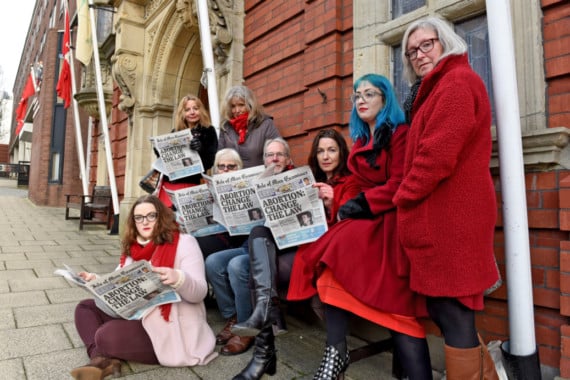
A major step was taken towards changing the Isle of Man’s abortion laws last week - but a long road lies ahead.
What happens next will determine the legacy of this House of Keys.
Even though MHKs rejected a bid to have Dr Alex Allinson’s Abortion Reform Bill sent to a select committee for up to six months, the detailed scrutiny of the bill’s provisions looks set to take several sittings - especially as MHKs will opt to deal with some clauses as a ’committee of the House’, removing the usual restrictions on debate.
Dr Allinson is in talks with the clerk of Tynwald’s office about when to begin the clauses stage - with the potential of an overlap with the Legislative Council elections next month a consideration.
.jpeg?width=209&height=140&crop=209:145,smart&quality=75)


.jpeg?width=209&height=140&crop=209:145,smart&quality=75)
The committee of the House mechanism means that, during proceedings on any particular clause, MHKs can opt to go into ’committee’ mode to allow deeper debate. In normal debate, MHKs are allowed to speak only once on any clause or amendment - unless they are the mover - but they would not be so restricted in committee mode.
There would also be the option of calling experts to give evidence or answer questions to the whole House of Keys.
Therefore, it is a tricky process, logistically, so that MHKs will have enough notice of when particular clauses or sets of clauses are due to be discussed, should they want to ensure a witness is available and sat in the public gallery at the right time. It may be that certain groups of clauses will be earmarked for certain dates.
No amendments or motions can be tabled during the committee of the House stage.
It will be a slower process than usual for legislation but should still prove quicker than sending the bill to a select committee of three or five members, who would take evidence and report back with recommendations before the Keys continued its consideration of the bill.
Those who had supported the select committee route argued that the bill was too important and its wording so crucial that it needed further, microscopic scrutiny, with expert witnesses allowed to challenge evidence already cited.
They rejected claims it was a delaying tactic.
Those against the select committee, pointed to the extensive consultation carried out on the draft bill. Several argued it was difficult to imagine any new evidence being brought forward. A select committee would have meant there was little chance of the bill becoming law until next year, they said.
The committee of the House system was cited as a way to ensure that no evidence would be overlooked, without the need for a select committee.
During last Tuesday’s debate, when the second reading of the bill was approved unanimously, opponents on the floor of the House were largely respectful of others’ opinions, but it is likely that there will be a greater level of dissent over some of the evidence that may be presented by those on opposite sides of the debate.
Outside of parliament, the debate has been more strained, with claims and counter-claims. Even the past week has seen different branches of the media accused of bias from different lobbies. There is the chance that any perceived sense of injustice could work its into Keys debate.
There will be numerous amendments tabled. Some will be to tighten up wording, others will be to add extra safeguards, or in the instance of Ralph Peake, to introduce a new clause to allow for a buffer zone around any centre to prevent protests taking place there.
But there will also be attempts to make substantive changes, time whether it be on the ’social concern’ provision for abortion up to 24 weeks, time limits or provisions relating to ’significant impairment’ limiting the quality or length of a child’s life.
Pro-choice campaigners are all too aware that after Tynwald approved the principle of abortion in 1994, what finally became law was substantially different from what many had expected.
This time, however, no change will go unnoticed.
Current law allows termination in the island up to 24 weeks, but only where medical practitioners consider there is substantial risk the child will not survive birth, will die shortly afterwards or will be seriously handicapped.
Pregnancies resulting from rape, incest or sexual assault may be terminated up to 12 weeks, but women must provide an affidavit attesting to the cause of the pregnancy.
Terminations on social grounds are not permitted,
Reform campaigners argue the rules are too restrictive and force women to travel off-island or seek abortion pills on the internet.
Dr Allinson’s bill would allow for abortion on request up to 14 weeks. Up to 24 weeks it would be allowed for serious medical reasons, in cases of rape or sexual assault, or on ’serious social grounds’.
After 24 weeks, an abortion may be permitted in exceptional circumstances, such as risk to the life of the woman or a chance of ’grave’ long-term injury. Other provisions include serious risk of the baby dying before or after birth or suffering ’significant impairment’ that would limit the length or quality of the child’s life.
The bill places strict restrictions on who can prescribe or supply abortions pills, but also makes clear that a pregnant woman seeking to obtain abortion pills would not be committing an offence.
Comments
This article has no comments yet. Be the first to leave a comment.