

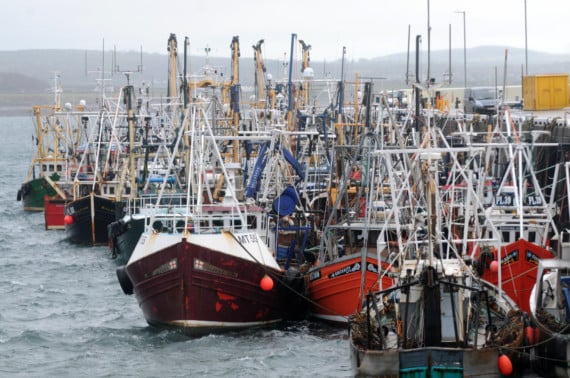
A decision by the UK government to pull out of an agreement with other European countries about fishing rights will have implications for the Isle of Man.
The trouble is nobody really knows what they will be.
In what might turn out to be a pattern as the UK makes announcements about leaving the European Union, the Manx government could react only after news was reported in the media.
Manx ministers are not forewarned.
.jpeg?width=209&height=140&crop=209:145,smart&quality=75)
.jpeg?width=209&height=140&crop=209:145,smart&quality=75)
After UK Environment Secretary Michael Gove announced the decision on Monday, the Department of Environment, Food and Agriculture released a statement to say: ’The Isle of Man is continuing to take an active role in discussions about the future of fisheries policy, as the UK Government seeks to renegotiate its position as part of the Brexit process.’
Mr Gove announced the UK’s decision to trigger withdrawal from the London Fisheries Convention, signed in 1964 before the UK joined the European Union, to start the two-year process to leave the agreement.
The convention allows vessels from the UK, France, Belgium, Germany, Ireland and the Netherlands to fish within six and 12 nautical miles of each other’s coastlines.
The agreement extends the same rights to fishermen from France, Belgium and the Republic of Ireland to fish in Manx territorial waters (six to 12 nautical miles).
Mr Gove will be writing to Geoffrey Boot MHK, Minister for the Department of Environment, Food and Agriculture, to formally advise him of the notice period and to explain the reasons for the UK’s withdrawal.
While the convention is not a part of the EU, the decision is connected with Brexit.
The announcement prepares the way for negotiations with the EU over the UK’s withdrawal from the Common Fisheries Policy.
It expected that discussions will centre on fisheries access and quotas as the Brexit process progresses.
The DEFA says the Isle of Man will continue to ’monitor developments and consider the legislative impact’ of the UK’s decision.
It says that very few of the foreign vessels that are permitted to fish in the Isle of Man’s six to 12 nautical miles limit actually do so, and that the UK’s withdrawal from the London Convention would not change the current fishing patterns of fishermen from the Isle of Man.
Mr Boot said: ’The department regularly attends Brexit meetings with the UK and the other Crown Dependencies as part of the Isle of Man government’s wider engagement programme.
’We take part in discussions about the impact of the UK’s decision to exit the EU and the potential opportunities around agriculture, fisheries, food and the marine environment.’
He added: ’There will be no definitive answers for the Isle of Man until the UK’s position is determined following the Brexit negotiations. However, it is important to stay close to developments and to promote the island’s best interests. We welcome this opportunity to attend focused discussions around fisheries policy to ensure our concerns are heard and considered.’
Mr Gove said leaving the European Union would involve exiting the EU common fisheries policy, which allows all European countries access between 12 and 200 nautical miles off the UK and sets quotas for how much fish nations can catch.
’When we leave the European Union we will become an independent political state and that means that we can then extend control of our waters up to 200 miles or the median line between Britain and France, and Britain and Ireland,’ he said.
’One critical thing about the common fisheries policy is that it has been an environmental disaster. And one of the reasons we want to change it is that we want to ensure that we can have sustainable fish stocks for the future â?¦ I think it’s important that we recognise that leaving the European Union is going to help the environment.’
His decision has been welcomed by fishing industry spokesmen in the UK.
Comments
This article has no comments yet. Be the first to leave a comment.