


Treasury Minister Alfred Cannan has unveiled an unprecedented £100m package of measures to protect businesses and save jobs in the face of the ’unseen enemy’ of the coronavirus crisis.
He announced a wage support package to help struggling businesses retain their workers with a contribution of up to £280 per week for every full time equivalent staff member for up to 12 weeks.
This is equivalent to 75% of the living wage.
The wage support will extend to all sectors of the economy with the exceptions of IT, financial services and e-gaming (where the effects of the crisis are not yet being felt so severely), and will be backdated to cover the March payroll.The Treasury Minister said this would help companies find the ways and means to retain staff even if this means they are on reduced rates and working from home.Mr Cannan also announced that Treasury was working with the banks over a new loan guarantee scheme with the government underwriting 80% of new lending to viable businesses to support cashflow.



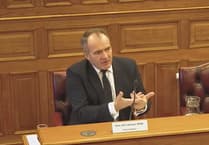
Businesses will get the option of deferring any VAT payments between now and June this year, with no interest or penalties applied.Treasury was working on a case by case basis to defer tax and National Insurance payments for any business finding themselves in difficulty 'during this extraordinary period of uncertainty', said Mr Cannan.A grant scheme announced last week offering £3,000 payments to businesses in certain sectors will be extended to the self-employed and those with only one employee in those same sectors, and it will be widened to cover those employed in the smaller retail industryA £5m special fund is being set up to help businesses such as those in the visitor accommodation sector that cannot trade during the current crisis.
Mr Cannan said a new Covid welfare benefit of £200 per week will be available from April 6 for those who suffer job loss or are unable to work as a result of coronavirus.Measures introduced under the Emergency Powers Act will ensure no one is evicted from their homes or businesses for non-payment.Mr Cannan said he expected banks to support the population through a range of measures including mortgage and loan holidays for those affected and needing assistance.The utility companies had committed not to cut anyone off for non-payment of bills over the next three months.He warned that with the domestic economy falling away and people spending less, there was a direct impact on government income.And if all the measures were taken to capacity, they would cost government up to £300m in the first three months and up to £600m in the first six months.
’We may not have enough to protect every job, every single business,’ he said.
Mr Cannan unveiled a £40m package of measures last week to combat what he described as 'effectively the overnight collapse of business revenue to certain sectors of the economy'.But he told a press briefing this morning that this wasn’t enough and as the crisis had escalated, it had become 'increasingly clear we need to do more, much more, to help everyone across this island nation in our fight against this lethal virus'.'All of us have a role to play - government, individuals, businesses,' he said. 'Every action we take is critical, every decision we make is vital.'Mr Cannan said his role was to provide 'a safety net in your hour of need'The Treasury Minister said he had committed substantial sums of money from reserves to bring forward the most comprehensive package of support that he reasonably could.He said the nature and range of proposals was 'quite simply unprecedented'.He predicted a lot of businesses would be able to recover quickly 'so long as we can keep the economy alive'.Mr Cannan said: 'Everyone must contribute and engage in what is now a national effort to keep jobs open and businesses alive so when this darkness turns to sunlight, and it will, this nation and this economy will be ready to bounce back.'The terms of the financial assistance scheme will be amended to provide an initial £3.5m to which the government will offer match funding for those businesses that want to change their operating models.