
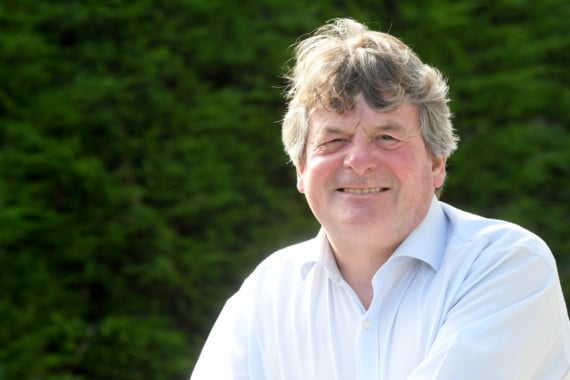
The year 2021 is General Election year in the Isle of Man.
These important facets of our democracy take place once every five years.
The House of Keys is the directly elected ( by the public ) branch of Tynwald, our Parliament.
The other branch is the Legislative Council whose principal role is one of scrutiny.

-(2).jpeg?width=209&height=140&crop=209:145,smart&quality=75)
.jpeg?width=209&height=140&crop=209:145,smart&quality=75)
.jpeg?width=209&height=140&crop=209:145,smart&quality=75)
The council is elected by the members of the House of Keys.
The unique part of Tynwald is that the branches sit separately for legislative consideration but come together for policy and financial matters.
Tynwald has been established over 1,000 years.
In 1979 we celebrated the Millennium of Tynwald. It is the longest continuous parliamentary assembly in the world.
Some Norse assemblies may have been established earlier but have broken periods where the assembly did not sit.
In 1881 Tynwald was the first National parliament to extend to property owning females a vote in a general election.
In 1919 universal adult suffrage was introduced on the basis of a residence qualification but the property qualification allowed for extensive plural voting continued until its abolition in 1969.
The first female Member of the House of Keys was Marion Shimmin, a teacher, who stood in Peel at a by-election in 1933 caused by the death of her husband Christopher.
They were both members of the Manx Labour Party.
She went on to serve her constituents until her death in 1942.
In 2006 voting was extended to 16 year old persons on the Isle of Man.
Led by current President Steve Rodan, I was pleased to play a supportive role.
At each election there has been an increased interest by younger people and I welcome their interest in matters concerning their future.
It appears clear that more younger people are becoming engaged in the relevant issues of the Day including the environment, further education costs, leisure activities and housing provision to name a few.
When I was first elected at a by-election in 1985 the Governor presided over Tynwald, we had constituencies of three members, two members and one member, and multiple boards with limited accountability.
We had no financial reserves to speak of and more than 3,500 people suffering the misery of unemployment from a lower working population.
There were very few questions in the House of Keys except for urgent matters concentrating on our primary role as legislators.
A decision was made to broadcast Question Time in the Keys on Manx Radio and the number of questions increased at the same time.
As a minister for 18 years I always voted for all questions to be completed orally but questioners always had the option if they wished for a written response or to have the matter carried over until the next sitting.
Today we have our own elected president, 12 two-seat constituencies, and a ministerial system which should provide for better accountability and a better opportunity for questions than other adjacent Parliaments where members are not guaranteed such opportunities.
No system is perfect and can always be improved but we have made significant progress.
Until my retirement last year I was re-elected on six occasions and I will always be grateful for the trust the people of South Douglas showed in me. I also was elected for one term to the Legislative Council.
I allowed my name to go forward on the basis that it was very clear the 2016 General Election would see some very experienced members standing down and it was clear there would be a significant number of new members.
I felt my experience may support some of the newly elected members but in retrospect it is clear that my most useful contribution was that of my chairmanship of the Tynwald Social Affairs policy scrutiny committee.
I supported the progressive members of the House of Keys who wished to see a more democratic Legislative Council.
Indeed, in my representation to Lord Lisvane I advocated, without success, for direct election on an island-wide or other geographical basis for the Council. I would have relished standing in such an election in Douglas.
I will always be a Keys man, enjoying the direct relationship with those people who had demonstrated significant support on each occasion.
For 2021 the General Election will be held on Thursday, September 23, between 8am and 8pm.
It will be on the basis of 12 two-seat constituencies with each constituency having approximately the same number of electors.
Information is available via the Crown and external relations team on 685754 or at [email protected]
Candidates must be 18 years old or older to stand and have been resident for five years.
There are certain categories of person who would be disqualified from standing and this information is available online or by request.
Candidates must be on the voters list and can choose to stand in the area they live or in another constituency.
The important deadline for ensuring your name is on the electoral register is no later than Thursday, September 2.
Candidates require a proposer and seconder and at least 20 assentors from the electoral role of the constituency in which they stand.
They are also required to set out all relevant interests including any stocks and shares held, directorships, sponsorships or membership of a trade union or professional society.
Again this is an important improvement.
When I was first elected the register of members interests was a voluntary function.
I thought this was wrong as at least one minister and others had failed to fill any information in which inevitably would lead to a questionable perception.
I took this anomaly on as an issue and eventually it was made a requirement for those holding public office.
Other things that have changed include that, when the first Council of Ministers was established, the Chief Minister’s nominees for ministers were put before Tynwald for approval.
For a long time that has not happened.
I always felt the Tynwald endorsement of the team would provide some confidence for the Chief Minister by way of taking policies forward.
Up until the latest election the Chief Minister was elected by a vote of all Tynwald members.
Now the Legislative Council will not be participating so the directly elected members will decide.
Whilst there will inevitably be speculation in advance of the General Election up until now, with one exception, those who are prepared to allow their name to go forward as Chief Minister have been reticent about publicly announcing such intention.
In the absence of a full party political system where the leaders would be the name proposed as potential Chief Minister I think the jury is out presently on how the public could have a meaningful input into the future leader and policies to be proposed in the following five years.
Whilst some members profess to be independent, which sadly can mean all things to all people, the colour of their rosette gives the voter more clue of political philosophy and obviously from my perspective I would like to see more transparency for the elector based on policy options rather than personality, that would be a real informed choice.
The most important thing though is to use your vote. Look at countries without this option.
I well remember the long queues in South Africa after Apartheid.
People have fought and made the ultimate sacrifice to secure democracy against fascists.
We owe it to their memory that we participate...
David’s next column will be in the Isle of Man Examiner tomorrow.
Comments
This article has no comments yet. Be the first to leave a comment.