
What must be done to grow the island’s working age population?
Worrying trends in fertility, migration and ageing are set up out in a new Cabinet Office white paper on meeting our population challenges.
The latest census, published in March last year, revealed the first fall in the island’s population since 1986.
It also showed significant emigration of young people and confirmed the population was naturally declining, with deaths greater than births and a growing number of older people.
.jpeg?width=209&height=140&crop=209:145,smart&quality=75)
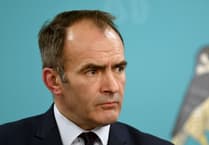

Policy and Reform Minister Chris Thomas MHK says in his foreword to the report: ’Clearly there is no silver bullet to reverse the decline in the island’s working age population - but we can make it a population blip.’
The report recommends a ’plan, monitor and manage’ approach to population projections and population-related policies.
Between 2011 and 2016, the number of people living in island dropped from 84,497 to 83,314.
The white paper predicts by 2036, the population could have fallen to 77,875, given zero net migration, or risen to 89,872, assuming net growth of 500 a year, or to a high of 101,051 if migration adds a net total of 1,000 to the Isle of Man population.
Fertility rates in the island have generally been on a downwards trend since 1996 and the number of births has fallen dramatically in recent years.
There has been a decline in the number of women of child-bearing age, from 16,590 in 2011 to 15,223 in 2016.
In the four years since 2012, the number of first child births have fallen by 9% and the number of subsequent births has fallen by 16%.
Causes of lower fertility cited include greater access to education for women, higher numbers in work, the change away from marriage and towards cohabitation, modern contraceptive methods and a greater delay in young people being able to move to independent living.
All these factors mean they leave it later than previous generations to have children.
The white paper recommends greater financial incentives either through child-related cash payments, tax allowances or subsidies aimed at offsetting some of the costs of bringing up children.
It suggests parents should be supported in making it easier to combine work and family, by offering retraining and more flexible working.
Availability and affordability of quality childcare is also highlighted as an area for improvement given that there are only enough places for 8% of 0-2 year olds and 50% for three- to five-year-olds.
The report also suggests changes to allow parental leave to be shared between mothers and fathers.
Emigration of young adults is another issue covered in the report. This is not a new phenomenon, it points out.
In every Census over the last 30 years the biggest fall or smallest increase has always been among the 20- to 24-year-olds.
A recent survey of graduates found that only about 48% have returned or are likely to return to the island after their degree.
Reasons for not returning include better career prospects, additional education, more affordable housing, better financial position, improved opportunities for future family and better social life.
The white papers sets out a series of policies that could attract graduates back.
It suggests the introduction of a graduate internship programme, developing a first-time buyers scheme aimed at graduates and young people, and setting up an ’Isle of Man Campus’ as a centre of excellence that UK universities could use to provide parts of their courses here.
It cites as a example the University of Central Lancashire in Cyprus to show this model is possible.
The report also recommends that government could underwrite or financially support leisure and social facilities for young adults to counter the perception of there being ’nothing to do’.
Whether or not the Isle of Man is successful in attracting working age individuals to move here, it is, like many European countries, facing an ageing population.
The over-65 population is expected to increase from 17,205 in 2016 to at least 22,453 by 2036, an increase of 30%.
While there are currently strong family ties, allowing a lot of care of older people to be done by family members, and children to be looked after by their grandparents, continued migration may lead to these ties being broken.
Other services would have to step in, the report warns.
It is estimated that, by 2036, population ageing alone will account for some 15% of increases in the cost of providing health care.
The white paper says older people need to be encouraged to be more active.
It also suggests a plan to develop an extra 200 nursing and residential care beds by 2036, alongside a funding regime to pay for them.
So what are the problems with population decline?
A drop in population has several negative consequences.
As there are fewer taxpayers, it means taxes would have to rise, services cut - or both.
The ageing population already means there are fewer taxpayers and more demand for health and social services as elderly people need them more.
With resources already stretched and population declining, it would make it more difficult to justify keeping smaller schools open.
Facilities such as the Ramsey Cottage Hospital might start to look like a luxury the community couldn’t afford.
Then there’s supply and demand. With less demand in shops, supply will drop. That would mean less choice and higher prices.
With less traffic on the roads, it would be harder for petrol stations to make ends meet. So some are likely to close and those that remain open would have to charge more for fuel.
Similarly, if traffic to and from the island drops, there would probably be fewer - and more expensive - ferry sailings and air services.
Property prices would fall too, which is a mixed blessing. Anectodal evidence suggests that there has been little upward movement in the Manx market for years now. Population decline is one reason for that.
So that’s good news for buyers but bad news for sellers.
In comparison, in Manchester prices rose 7.3% in the last 12 months alone.
If more people move to the Isle of Man, will it fill up?
The UN’s estimates of population density show that the Isle of Man has fewer people per square mile than much of Europe.
It has 363 people per square mile.
That compares with 660 for the UK. Northern Ireland, Scotland and Wales are big in area but not in population, which means that England is far more densely populated, at 1,010 per square mile.
Jersey is 2,186, Guernsey 2,183, Macau 48,003, Germany 593, France 295 and Canada 8.8.
Comments
This article has no comments yet. Be the first to leave a comment.