
Local authorities may not get to keep all the rates income they raise.
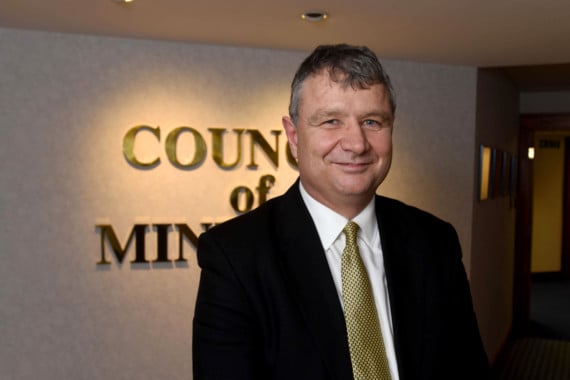
Policy and Reform Minister Chris Thomas confirmed it was being looked at after a decision was taken to widen the scope of possible rates reform.
On Tuesday, he gave a statement on the rates reform project.
He revealed: ’The scope of the rates modernisation project is extended to include non-domestic property rating, the one third of rating which was previously excluded.




’We will be consulting on this extension to the scope of the project.’
It meant there were ’important’ new policy issues to consider.
’This includes the fact that rating authorities may no longer retain all rating income arising from within their boundaries and that the proportion of property tax income raised from residential and non-residential property might not be maintained,’ he said.
’The differences between economic sectors in respect of rate levies should also be considered.’
He added: ’There will also be the opportunity to consider how business rates could be used for national community-based policies.
’As many of these projects cross local authority boundaries, one aim could be to see more collaboration between local authorities on bidding for joint projects.’
He said the Cabinet Office would work closely with the Department of Infrastructure, which is responsible for local authorities, and the Treasury. But he insisted that no decisions had been taken.
Earlier, Mr Thomas said the delays to announcements on rates reform reflected the complexity of the matter and other commitments.
’The rates issue is no longer just a local authority issue,’ he said. ’Water and sewerage rates now account for more than half the money collected using rateable values.’
Tynwald was due to receive a report from Manx Utilities on the pricing policy for water, sewerage and electricity in October.
The MUA had called in consultants as part of the review, which would ’consider the impact of the introduction of smart meters and the benefit of separating the utilities bill from the local authority rate demand’.
Mr Thomas added: ’I confirm that drafting instructions for a Rating and Valuation Bill will be finalised by Cabinet Office working with Treasury, and in consultation with MUA and local authorities.’
That bill was set to be introduced in the next legislative session.
Those instructions include of a number of issues, including:
â?¢ Moving to a more contemporary valuation system which is reviewed and revalued more frequently.
â?¢ Collection could be undertaken by other public bodies.
â?¢ Removing the statutory requirement for a prompt payment discount and replacing it with penalties for incomplete or late payment.
â?¢ Addressing ’key issues’ including single occupancy.
â?¢ Opportunity to consider other changes to ’ensure that the system of annual property taxation is fair, easy to understand and simple to administer’.
In addition, powers would be brought in to ensure that any transition would not result in sudden changes to bills.
Mr Thomas pledged to give a progress report on the plans in October and said it would be helpful to hold a policy debate before any legislation was introduced.
Comments
This article has no comments yet. Be the first to leave a comment.