
An attempt to better understand the decisions that led to the Covid-19 lockdown has been thwarted by the Cabinet Office.
The Isle of Man Examiner submitted a freedom of information request for all coronavirus related advice received and discussed by the Council of Ministers since January 1, including minutes of all CoMin meetings where this was discussed.
This request was submitted by our reporters on April 28 and, on July 31, we got our response: ’redacted’.
Aside from extracts from Council of Ministers’ minutes ranging from March 10 to April 30, the large majority of the documents supplied to us under FoI were redacted - or censored.

.jpeg?width=209&height=140&crop=209:145,smart&quality=75)

.jpeg?width=209&height=140&crop=209:145,smart&quality=75)
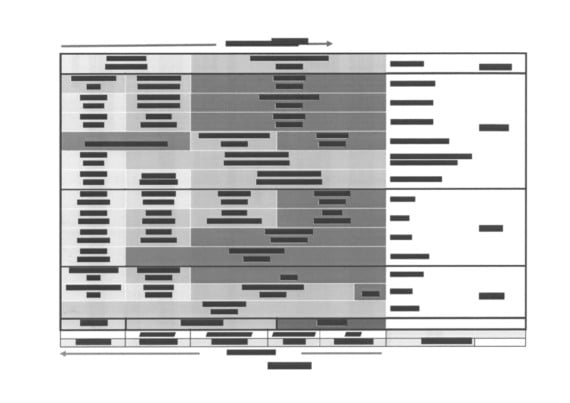
The documents which include advice supplied to CoMin before and during the lockdown period have been crossed out with black lines, revealing only snippets of the details that led to the most monumental decisions being made on behalf of the people of this island since the Second World War.
Minutes from CoMin meetings mostly outline the decisions that were made, this includes March 12 when the government moved to the delay phase of planning for an outbreak of Covid-19 and an acknowledgement on March 22 that without action to prevent the spread ’the local intensive care unit would be at maximum capacity before too long’.
March 22 was the day when CoMin was advised to close restaurants, bars and gyms, agreed that non-essential hospital services would now be at a minimal provision, with focus on emergencies.
It was also the day when it was decided to close the borders to non-residents from 9am on March 23 and to close the island’s schools to all children except those of key workers from March 23 at 3.30pm.
On March 25, it was recommended that the island close its borders to all but essential workers from 6.30am on March 27 and that the initial lockdown period would be in place for 21 days.
The minutes added: ’Council further noted that lockdown could be further enhanced with a mandatory requirement for all residents to stay at home, with exemptions for key workers.
’Council acknowledged the severity and gravity of locking down the island, particularly to its own residents and considered the implications of such and the significant health risks associated with not doing so.’
However, while the FoI response provided these historic Council of Ministers minutes, it is not revealed what advice ministers received in order to make these decisions.
blacked out
The paper prepared for ministers on March 25 by chief officer Will Greenhow is heavily redacted with only small details provided in rare sentences that haven’t been blacked out.
It is only on page two, where two sentences are not redacted, that we learn anything from the document.
It said: ’If at three weeks, the infection rate is no lower there may be no option but to consider further restrictions. If the infection rate has slowed, then consideration will be given to relaxing criteria on evidence-led basis.’
Also on this date, the Council of Ministers were told that closing the border would ’help to protect the health system by preventing further increase to the island’s population during the Covid-19 response, it also reduces the number of people entering the island that may be carrying Covid-19’.
However, the other arguments for and against this measure are redacted. A further section says that students represent a ’significantly high risk’ to the island due to the increased likelihood of increased social interaction, but no further details are given about what decision was taken or why.
A similar document, dated April 8, has all but 13 and a half of its 15 pages completely redacted.
The first section of unredacted material focuses on exit scenarios from lockdown which outlined three options of maintaining stringent measures, applying and relaxing stringent measures as required and a mix of measures to maintain a manageable incidence level.
The document said: ’This framework recognised that 1) is not sustainable in the longer term and focuses on option 3), with regression to 2) only if the situation deteriorates.
’In doing so parts of the internal economy could be opened up in a phased way where the risks are clearly understood, monitored and mitigated.’
The other section that is unredacted is a page of information from the Senior Clinical Leadership Team, which said the government measures had had a ’significant impact on the spread of Covid-19 infection on the Isle of Man’.
This advice advocated the return to work for people who ’work alone and have minimal contact with others’ including horticulturists, green keepers, tree surgeons as well as painters and builders who worked outside.
Other documents provided have also been heavily redacted, with small details, most of which were already common knowledge, being released.
In its response to our FoI, the Cabinet Office admitted that ’accountability, transparency and furthering public debate’ were all reasons to disclose the information we asked for.
However, it cited legal advice taken when considering options, legal professional privilege and allowing legal advisers to be able to ’present the full picture, which will include arguments in support of their final conclusions and arguments that may be made against these’.
It added: ’Disclosure of legal advice could materially prejudice an authority’s ability to protect and defend its legal interests.
’In taking these factors into account, the Cabinet Office determined that the factors in favour of maintaining the exemption outweigh the factors in favour of disclosing the information.’
We feel the public have the right to know why these decisions were taken and what advice they received both for an against their decision making and as such have appealed against the redactions made by the Cabinet Office and intend to challenge them with the Information Commissioner.
Comments
This article has no comments yet. Be the first to leave a comment.