
Philosophical debates about man’s relationship with animals have been around since Sophocles’ time, but the last few days have put this relationship into sharp focus.
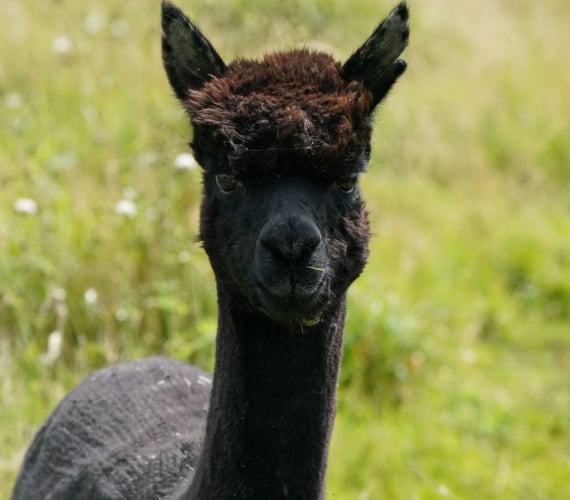
Firstly there was the death of the alpaca, Geronimo, who had tested positive twice for bovine TB.
He was taken from his home in Gloucestershire last week by government vets and euthanised at a DEFRA site nearby despite the presence of protesters, calls for clemency from several celebrities (including Joanna Lumley), and his owner’s appeals to government officials for a review of his death sentence.
She claimed that Geronimo tested positive because of the food supplements he’d been fed in his native New Zealand.



-(1).jpeg?width=209&height=140&crop=209:145,smart&quality=75)
Putting the rights and wrongs of Geronimo’s case to one side, not least why he had to be taken away from his home to be euthanised, how is it that one animal can capture so much media and public attention?
Sadly, one of the primary reasons is likely to be that Geronimo was very appealing to look at, not to mention photogenic - with a cute fluffy face and big brown eyes. The hundreds of badgers being routinely culled in Gloucestershire don’t have quite the same ’PR pulling power’.
And the second animal-related cause celebre of the last few days relates to the efforts made by the improbably named Pen Farthing to evacuate 173 dogs and cats from Kabul, as the humanitarian disaster unfolded in Afghanistan.
There has been much criticism of the fact that animals were seemingly prioritised over humans to be taken to the airport, and then allowed to board a plane. Indeed, staff from Farthing’s Afghan animal charity were denied access to the airport and were left behind.
Farthing justifies the evacuation of the dogs and cats by stating that they travelled in the cargo hold of a privately chartered plane, which was funded by donations, and that he is continuing to campaign for the safety of the staff who were left behind.
The dogs and cats are now being quarantined in a rescue centre in Wales, and apparently there are hundreds of would-be adopters for each animal.
Which raises the second philosophical question: why have so many people registered their interest in adopting animals who have been in the headlines, when many hundreds more dogs and cats are waiting to be adopted from the Dogs Trust, Cats Protection, RSPCA et al?
Many of these animals also have sad, sometimes tragic, back stories but they are not headline news.
That said, it would be wonderful if Farthing’s animals all pass their DEFRA health checks for rabies and the like, and find loving new homes; and let’s hope the public interest in evacuating people from Afghanistan, not least Farthing’s staff, is sustained as long as is necessary.
There should be a symbiotic relationship between animal and human welfare, because the two are inter-related and each is important in its own way.
Speciesism is another philosophical area for debate.
Dogs, in particular, evoke strong emotions in many people and yet a species very closely related to the dog in terms of intelligence, the humble pig, has a much lower ’emotional ranking’.
Many people will happily eat pig with little regard for how it was reared and slaughtered, eager to pay the lowest possible price for a packet of bacon or a pork chop.
Wouldn’t it be wonderful if we could elevate all animals, of all species, to a point where the ManxSPCA’s vision could become a reality, namely that we should live in ’a place where all animals are treated with kindness, compassion, dignity and respect for their needs’?
Comments
This article has no comments yet. Be the first to leave a comment.