

The Cabinet Office has come under fire for its role in the ’biscuitgate’ saga from last year’s election.
The issue of what refreshments, if any, a candidate could provide to members of the public was one of those dealt with by the select committee.
Some candidates criticised the advice they received from the Cabinet Office, about whether they could provide food or drink to voters. They were told to seek their own legal advice.
’Treating’ is an offence under election law, but it is the intent, rather than what the treat is, that matters.

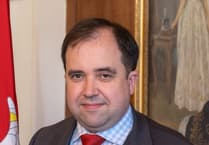


Select committee chairman David Cretney said that information supplied by the Cabinet Office served to confuse the matter - even if it was correct, according to the ’letter of the law’.
He argued candidates were not seeking legal advice.
’It would be sufficient for the guidance to say treating requires a corrupt intent, it does not apply to ordinary hospitality, and leave it at that,’ said Mr Cretney. ’If the Cabinet Office had adopted that approach, a lot of this kerfuffle could have been avoided.’
Tynwald voted to support nearly all of the select committee recommendations, including an investigation into the feasibility of online voting, an examination of the number and location of polling stations and new guidance for returning officers.
One recommendation - that was not supported by the Council of Ministers - was rejected.
It would have allowed candidates to be provided a copy of marked registers from the two most recent elections.
Marked registers show who, on the electoral register, voted. They are available for inspection for up to 12 months after an election, to help detect any fraud.
CoMin raised concerns about data protection and human rights if they were released after that.
Comments
This article has no comments yet. Be the first to leave a comment.