
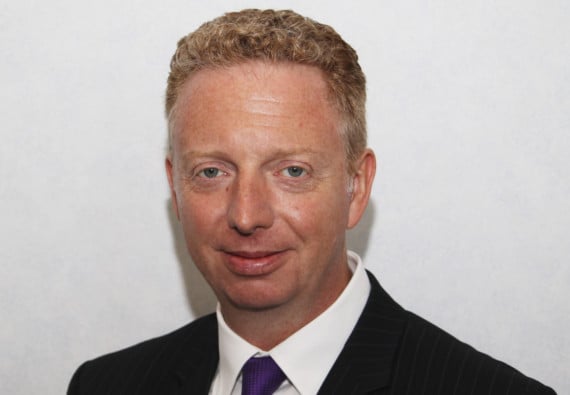
Treasury Minister Alfred Cannan MHK will be joined by financial controller, Caldric Randall, when he gives evidence at the latest sitting of the Select Committee on Public Service Broadcasting today (Thursday).
The committee was established in January this year to review the current licensing, provision in the island and funding of public service broadcasting.
Giving evidence to the committee last week, Manx Radio managing director Anthony Pugh described his station as a public service broadcaster ’light’.
Much discussion focused on the meaning of public service broadcasting and the adequacy of its funding.



Mr Pugh told committee chairman Dr Alex Allinson MHK that, as a public service broadcaster, the station was to provide a minimum speech content of 40%, but limited funding and resources made this difficult.
’We have a 40% speech requirement and we fulfil that role, but it costs money to provide public service broadcasting so guaranteed funding is necessary and the current funding model is broken,’ he said.
Less state funding is provided in the Isle of Man, he said, than in most other developed countries, and Manx Radio’s funding did not support the public service broadcasting requirement of 40% speech content.
He said supporting democracy was ’highly important’, along with a breadth of programming, quality news and free access to the content.
’In a simplistic way, it’s there to improve the quality of life for everyone in the Isle of Man,’ he said.
But when asked if he thought Manx Radio went beyond the requirements of public service broadcasting, he said: ’I would say the opposite.
’I don’t think we fully meet the requirement of a public service broadcaster but it comes down to the number of people you have and we have not had the resources to do documentaries on matters that are important to Manx people.’
He said they could do news and sport and arts programmes, for example, but finance simply was not there to do more.
’We are not giving the in-depth service you would expect of a public service broadcaster,’ he said.
The station’s chairman, Bill Mummery, told the panel, in addition to the £875,000 annual government subvention, the station raised around £1 million, gross, from advertising, which he said was a ’necessity’.
’Sixty per cent of our funding is from the commercial sector,’ he said.
Advertising
Mr Pugh added: ’From the listeners’ perspective, it would be more desirable to have an advert-free station, but there are other factors to consider and it is vital to the funding of the station.
Asked about the possibility of a move away from the station’s headquarters on Douglas Head, Mr Pugh said they were by no means ’wedded to the building’, but all costs analyses suggested the cheapest option was to remain put.
Over the past 10 years around £1 million had been spent on the building, but he said in 2007 the cost of a brand new building was estimated at between £3.5 and £5 million. If the station were to move and the land sold to build flats, they would be unlikely to sell because of the proximity of the radio mast , not for the radio station, but for the emergency services’ communications.
TT radio coverage for the TT, Classic TT and Manx Grand Prix used 490 man hours, he said, for which the radio received a ’part payment’, but TT radio coverage for next year was going out to tender.
On the subject of staff morale and pay, Mr Pugh said: ’Manx Radio works today because we have a handful of staff for whom Manx Radio is their life and they work extra-ordinary hours, and for our news team, who are all graduates, their pay is not satisfactory.’ The committee is due to report its findings in July.
Comments
This article has no comments yet. Be the first to leave a comment.