

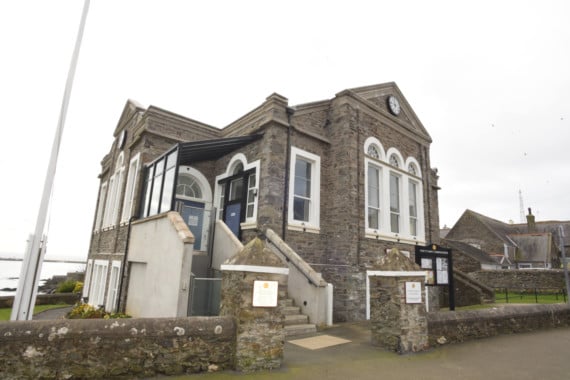
The discovery of a £200,000 discrepancy in a village’s finances could shed new light on a town hall crisis dating back 15 years.
Back in 2002, Port St Mary Commissioners found itself in the headlines when it emerged it had built up huge and unexpected debts.
It resulted in the local authority going into special measures and the village setting the highest rate in the island.
A public inquiry and Tynwald select committee investigation followed.
.jpg?width=209&height=140&crop=209:145,smart&quality=75)

-(2).jpeg?width=209&height=140&crop=209:145,smart&quality=75)
But now a significant discrepancy has been found in the Commissioners’ accounts.
The cash balance is accurate but the cash-backed reserves appear to have been understated by just under £200,000.
It’s a discrepancy that appears to date back more than 15 years.
But the records don’t go back far enough to confirm its origins.
Over the last three months, the authority has been working with its auditors to try to reconcile the anomaly in its books.
There is board approval to make the necessary adjustment to the reserves.
It was initially thought that the missing money could be the result of underspending on borrowings for capital schemes but that has since been ruled out.
In January, the board announced the village’s rates would go up 9p this year from 306 to 315p in the pound. The discovery of the anomaly doesn’t mean there is now money for a cut in the rates, however.
In a statement, the Department of Infrastructure said: ’The department has been made aware of an historic anomaly in the accounts of Port St Mary Commissioners.
’Ultimately this is a matter between the local authority and its auditors.’
Back in early 2002, Port St Mary was hit by a financial crisis when a deficit, initially thought to be of about £90,000, was discovered in the general revenue account.
Audited accounts had not been signed off since 1999 and it emerged that debts had been building up from that time, with the final total for the deficit later established to be £135,380.
A public inquiry was held in May and June 2004, chaired by JF Kissack, who found that between 1997-98 and 2003-04 the authority expenditure had exceeded its income by a total of £253,895.
The majority of that excess, £148,319, was the product of budget decisions, principally between 1997-98 and 1999-2000, when a level of rate had been set that was insufficient to cover the annual expenditure.
The balance of £105,576 was attributable to unplanned annual deficits largely in the period 2000-01 to 2002-03.
Mr Kissack concluded: ’The story revealed in this report is a sad one.
’There are no villains but equally and unfortunately there are no heroes.
’It is a story of decent, well-intentioned local commissioners seeking to do the best for their community but falling into deficit because they had no grasp of the overall financial circumstances in which they were functioning.
’Their officers, equally dedicated and equally well-intentioned, should have been able to alert the commissioners to the position but they had no information or control systems on which they could rely so, inexcusably, they were in the dark.’
Comments
This article has no comments yet. Be the first to leave a comment.