

The Manx government would be left with no alternative but to challenge in the courts ’unconstitutional’ Bill amendments passed in Westminster.
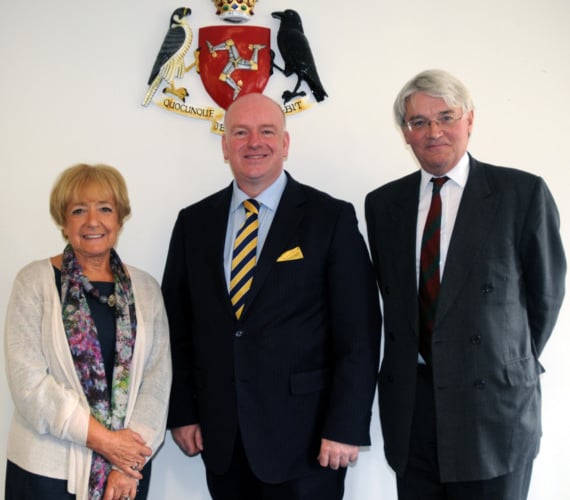
In an urgent statement in the House of Keys today, Chief Minister Howard Quayle criticised amendments to the UK’s Financial Services Bill tabled by a group of 40 MPs led by Labour’s Margaret Hodge and ’Plebgate’ Tory Andrew Mitchell.
The MPs were seeking to force the Crown Dependencies to set up public registers of beneficial ownership in a move that Mrs Hodge said would ’bring transparency to Britain’s tax havens’.
In the event, debate on the Bill and its proposed amendments was pulled by the Westminster government. But the Bill is one of the pieces of key legislation needed to protect the UK’s financial services industry in the event of a no-deal Brexit.

-(1).jpeg?width=209&height=140&crop=209:145,smart&quality=75)
Amendments proposed ’without consultation and without consent’ were in the opinion of the Manx government ’wholly unconstitutional’ as well as being ’unworkable’ and ’unenforceable’, Mr Quayle told MHKs.
He said deferral of the debate on the Bill had ’avoided the risk of the UK’s democratically elected parliament legislating for the Isle of Man without our consent’, said Mr Quayle.
The deferral had provided an opportunity for ’real and meaningful engagement’ with the UK government regarding public registers, he said.
We are not represented in the UK parliament and it was a ’long-standing convention’ that the UK does not legislate on domestic matters for Crown Dependencies, the Chief Minister said.
’If passed, we may have been left with no alternative but to challenge the legislative provisions before the courts,’ he said.
He said the government ’wholeheartedly’ endorsed the aims of the MPs to tackle money laundering financial crime on a global scale. ’Our commitment is clear and continuing,’ he said.
The UK has adopted and implemented a form of public register but the EU had been markedly slow in following suit and the majority of EU states are a ’long way from having working public registers of beneficial ownership’.
Lawrie Hooper (Ramsey) said it seems to be very much a temporary reprieve and asked what planning the Cabinet Office was doing to look at options should this happen in the future.
’Yes, this is a temporary delay, this will be brought back,’ said Mr Quayle. ’This Bill will come back in less than a month.’
He said the current system - with a register accessible only to tax and law enforcement agencies - was working well, and we had complied with all requests for general tax information within 24 hours or one hour if there was a concern over terrorism financing.
But Richard Murphy of Tax Research UK insisted the UK does have a right to legislate and was entitled to intervene because the Crown Dependencies are threatening the principles of good governance by refusing to create public registers.
He said this was creating ’risk for the UK as a whole’. 'What the Crown Dependencies are doing is deliberately undermining the good governance of the corporate world,’ he said.
In 2016 the UK became one of the first countries to create a public register of the beneficial owners of companies. It is called the register of Persons with Significant Control.
Critics claim it is open to abuse. As iomtoday discovered, it only takes a quick search to find, for example, a company with a Mr Donald Duck as a person with significant control.
Comments
This article has no comments yet. Be the first to leave a comment.