
Supporters of Brexit have long argued it will provide a boost for British fishermen.
Quite how much of a boost is now in dispute and Manx fishermen could be facing more regulation after March 29 - while being unlikely to secure a greater proportion of the Irish Sea quotas.
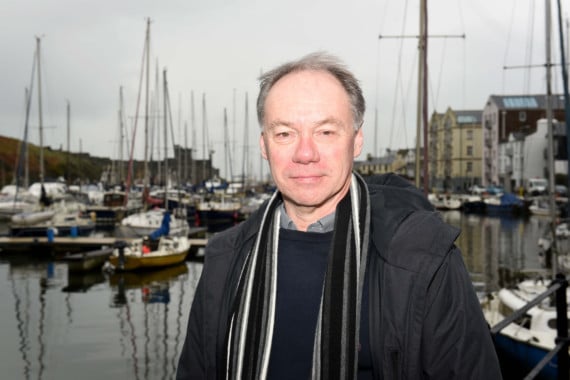
That’s the view of the head of the Manx Fish Producers’ Association, Dr David Beard, who explained that Manx waters occupy 8.6% of the Irish Sea - but depending on species, the Isle of Man only has between 0 and 1.5% of the Irish Sea quotas.
Mr Beard told the Manx Independent: ’The argument is that when the UK becomes a coastal state it should be entitled to far more quota. If the UK gets more quota, the Isle of Man similarly should expect more.
.jpeg?width=209&height=140&crop=209:145,smart&quality=75)

.jpeg?width=209&height=140&crop=209:145,smart&quality=75)

’This is something I’ve been shouting from the rooftops with the UK and Manx governments.
’This is what we are striving for. But I don’t think the Manx government believe we are going to get it.’
Some 1,400 tonnes of scallops are landed in the island by Manx boats each year.
Between 70 to 90% of scallops, mainly king scallops, are exported to Europe.
Some UK boats that fish in Manx waters land scallops here but most gets landed in Scotland or Northern Ireland.
No Manx boats fish for herring in Manx waters and two Northern Irish boats have that quota.
Mr Beard said it was expected that requirements for health certification and traceability would become more of an onus on suppliers after Brexit, with a government vet expected to sign off each shipment. Traceability will require proof of where the fish is caught and by which boat while health certification ensures the fish comes from a certified area and is processed in the right way.
There might be exemption for scallops and queenies, however, and discussions are currently under way on this at UK level.
Mr Beard said: ’Fish producers will need health certification and traceability. Scallops might get an exemption.
’At the moment the supermarket hubs in France test the product as it arrives.
’After Brexit, there may be a requirement for tests to be carried out by the supplier as well. There is going to be additional cost.’
’There is a lot of uncertainty still. We anticipate that whatever happens we are going to have hiccups with shipments of scallops into Europe at least for a few weeks. We expect some delays.’
He said exports in France had been subject to delays at Calais due to the ’Gilets Jaunes’ protests which had also reduced demand for scallops in Parisian restaurants.
Mr Beard said the point where his organisation and the Manx government had to be strong on securing more quota is when a new fisheries management agreement is negotiated.
The current deal includes an element of the Common Fisheries Policy which falls away after Brexit.
Comments
This article has no comments yet. Be the first to leave a comment.