
Have you ever noticed how some folk use verbal short cuts?
You know the sort of thing that I mean, why use 10 words when two will do?
If you said to someone, ’going down town ?’, both parties would know that you meant ’I’m just off to Douglas to have a look around the shops, would you like to come with me?’
One of my work colleagues, who has sadly left this mortal life, was a gifted exponent of brevity in communications.
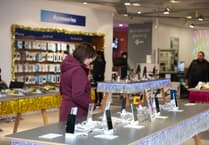
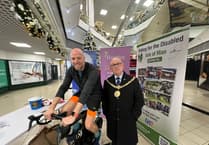

.jpeg?width=209&height=140&crop=209:145,smart&quality=75)
She could walk towards a prospective customer who had just entered the shop, lift her chin, and grunt.
It could be taken to be a rather abrupt greeting but she neither meant nor intended any disrespect or insult.
What she had said to the person who had just entered the shop, albeit only in her mind, was quite simply ’good morning (or afternoon), can I help you?’
We must have worked together for 25 years or more and until the last day, she never changed.
We had a very low turnover of staff.
This wasn’t unusual in the island, where shop workers especially were well known for their permanence.
I often talk about my time in Strand Street and the many happy years that I enjoyed colleagues and customers alike. I learned my trade from the bottom up and eventually became the boss.
I like to think that I was reasonably successful in my endeavours, and I’m quick to point out to anyone who cares to listen, that we were a team that worked well together.
A good boss is only as good as his staff, and a successful business works on mutual respect.
Who would want to be a shopkeeper today?
When I went to work in Strand Street in 1963, Douglas town centre was what we all knew as the main street. It ran from what was called Greensill’s Corner at the far end of Castle Street, continued along Strand Street, Duke Street and Market Hill to the North Quay.
By and large the shops in Douglas were what you would a call traditional mix. They were mostly family businesses and in many cases the families still lived over their shop.
The back streets, that ran parallel with the shopping street, housed a motley mix.
In one small section alone, there was a traditional blacksmith, who in my time still shod horses and repaired metal work, a coal yard, and a scrap yard. Two separate enterprises that coincidently were run by two brothers.
But back to the shops .
Slowly and quietly things were changing. Our holiday trade was being nibbled away by the Costa del sunshines and the local shopkeepers who relied on this income were starting to feel the squeeze.
Then along came the supermarkets.
This was a major game changer that was to affect more of the main street traditional shops than could ever have been imagined.
With one blow we lost grocers and greengrocers, butchers, fishmongers, pharmacies and many more. Out of town DIY superstores replaced the traditional ironmongers and so it went on and on.
The last straw was the off-island fashion shops.
This bunch of retail tail-chasers were either part of one or another major high street group who were dedicated to setting up their stalls next door to each other in every town.
The old timers that were left to fly the ’buy local’ flag could not possibly hope to compete with them and gave up.
And guess what came next? Just one word: Pandemic.
But don’t worry. We’ve still got betting shops, charity shops, phone shops and takeaways, travel shops, shoe shops and lots of coffee shops.
It would be nice to have a bank or a proper post office, but never mind.
Doesn’t the new paving look nice?
Comments
This article has no comments yet. Be the first to leave a comment.