

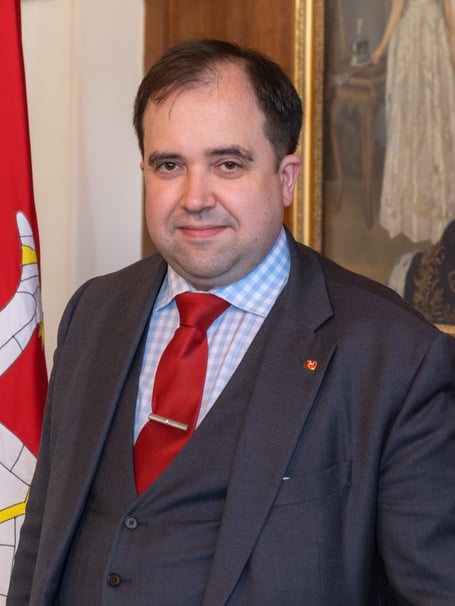
The risk of a meningitis outbreak on the island ‘remains very low’, according to the Cabinet Office Minister.
David Ashford said there is no need to change the current vaccination programme for the infection despite an outbreak of meningitis B in Kent last month, which claimed the lives of two students amid more than 20 cases.
Mr Ashford, whose remit includes Public Health, was responding to a written Tynwald question from Rushen MHK and Speaker of the House of Keys, Juan Watterson.
Mr Watterson asked in what circumstances vaccination against meningitis would be offered, and to whom.
.jpeg?width=209&height=140&crop=209:145,smart&quality=75)
.png?width=209&height=140&crop=209:145,smart&quality=75)

.jpeg?width=209&height=140&crop=209:145,smart&quality=75)
In response to the Kent outbreak, Mr Ashford said: ‘The overall risk of meningococcal disease on the island remains very low and there is no evidence to suggest a need to change the existing vaccination programme.
‘Public Health is aware of recent reports of cases of meningococcal disease in Kent. These cases have been investigated by the UK Health Security Agency (UKHSA), and at present there is no evidence of a wider national increase in risk.
‘There are no new linked cases reported in recent updates and overall prevalence is declining. This suggests that transmission has been contained and the outbreak has likely passed its peak.
‘We will continue to monitor the situation closely. Based on current evidence, the risk to the Isle of Man population remains very low, and there is no indication that any change to the existing vaccination programme is required.’
Mr Ashford also outlined the current vaccination programme in place for meningitis.
He said: ‘Meningitis is a condition that can be caused by a range of organisms, including both bacteria and viruses.
‘Not all forms of meningitis are vaccine-preventable. However, effective vaccines are available for some of the most serious bacterial causes and these are included within our routine immunisation programme.’
He explained that the meningococcal B (MenB) vaccine, responsible for the Kent outbreak, is offered to infants as part of the routine immunisation programme, starting at eight weeks of age, with a second dose at approximately 12 weeks and a booster at one year.
‘This schedule reflects the higher risk of severe disease in babies and very young children,’ he added.
‘The MenB vaccine is not routinely offered to older children or adults. Protection following vaccination in older age groups wanes relatively quickly, offers limited impact on transmission, and the overall risk of disease is shown to be lower for these cohorts.
‘The vaccine remains available privately for those who wish to access it outside of the routine programme.’
The meningococcal ACWY vaccine, which protects against strains A, C, W and Y, is offered to adolescents, typically 14 to 15-year-olds, as part of the routine immunisation programme.
It may also be provided to individuals at increased risk, and for travellers visiting regions where these strains are more prevalent.
Mr Ashford said: ‘This vaccine provides longer-lasting protection and reduces bacterial carriage, which helps to limit transmission within the population.
‘In addition to the routine programme, vaccination may be offered to specific groups in response to a confirmed case or outbreak, following public health risk assessment.’