
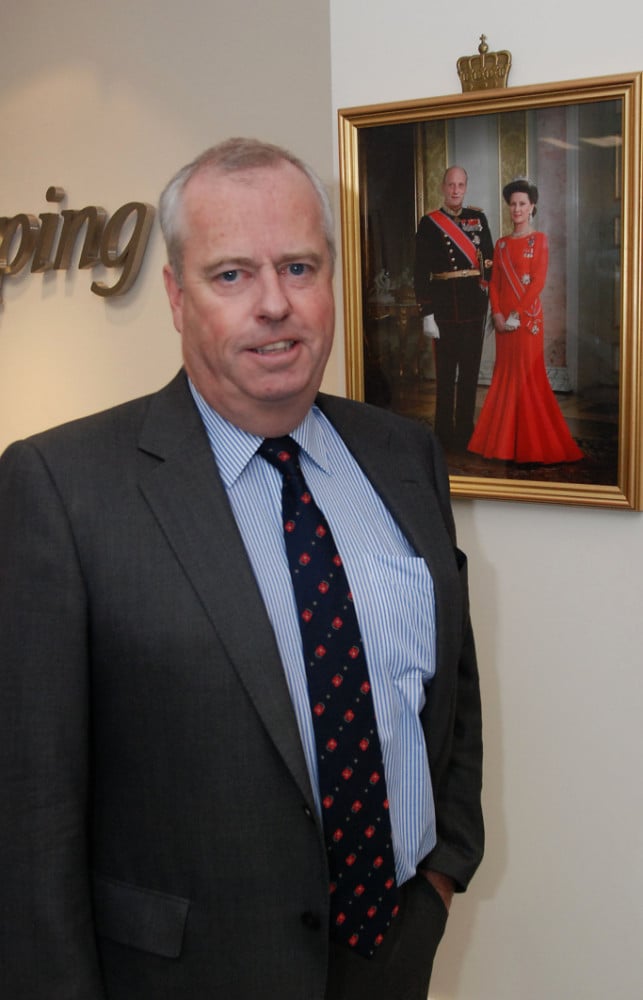
The Isle of Man Shipping Association says it warmly welcomes the government’s harbours strategy and £11m plans for a cruise berth.
A £35m to £40m scheme for a fixed deep water landing stage was championed last year by the Shipping Association, which argued it would boost tourism and pump thousands of pounds into the Manx economy.
The proposals developed with Dutch engineering and design company Royal Haskoning DHV would have seen a new fixed landing stage built on the seaward-side of the breakwater that protects Douglas harbour. It superseded earlier plans for a floating berth.
Government, however, is proposing a cheaper solution, with a £11m extension to Victoria Pier to accommodate smaller cruise ships.
Association spokesmen Lars Ugland and Russell Kent described the plans as a ’step forward in recognising the port of Douglas is not future proof when considering ever increasing sizes of ferry, tanker, supply, leisure and cruise vessels’.
But they said they had some concerns about the feasibility of deepening the port outside the Victoria Pier and of the size of the area to be deepened.
Likely high ongoing maintenance costs required for continual dredging should be included in the overall scheme and costs, they said.
The Shipping Association also has concerns about achieving depths of nine metres being proposed in the inner harbour for the new oil/cement berth.
Mr Ugland and Mr Kent said they considered it essential that a larger outer harbour scheme is included within the engineering consultant’s scope of work to determine its feasibility and associated costs.
They said all options needed to be considered with accurate and detailed information to ’determine the best long term solution for the gateway port’.
They said that given the proposed £80m total costs of the harbour redevelopment project, the opportunity was not missed to invest in ’future-proofing’ the port to benefit the island’s long term development.
’This is infrastructure that will potentially last for over 100 years and should be viewed with a long-term strategy in mind,’ they said.
The Shipping Association’s plans for a deep water landing stage would have offered berthing for cruise ships up to 400 metres, the current largest being 362.
Larger cruise ships currently visiting the island have to moor in the bay and use small tenders to get passengers ashore, weather depending.
Supporters of a deep water landing stage scheme cite the success of Orkney in attracting cruise ships. It is now Britain’s most popular cruise ship destination with some 140 cruise ships calling in annually.
Comments
This article has no comments yet. Be the first to leave a comment.