
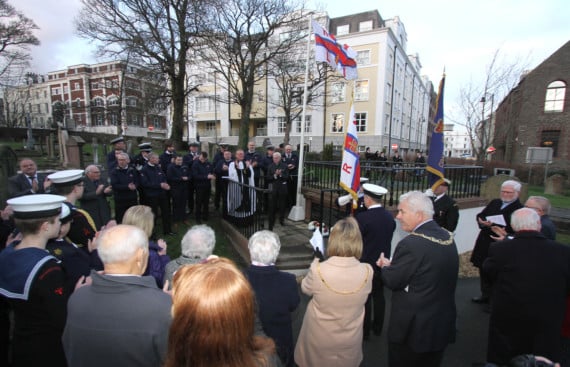
A memorial service was held at the grave of the man who set up the Royal National Lifeboat Institution.
Led by the sound of bagpipes, a parade of people made their way to Sir William Hillary’s grave, including members of the RNLI, the Lieutenant Governor and others wanting to pay their tributes.
The group walked through St George’s Churchyard at the weekend where a wreath in the shape of an anchor was laid by the Lieutenant Governor Sir Richard Gozney who is RNLI Douglas Patron.
Conducting the memorial service was the Archdeacon of Man, the Venerable Andrew Brown with the Methodist Minister, Rev. Richard Hooton also taking part.

.jpeg?width=209&height=140&crop=209:145,smart&quality=75)
The RNLI was represented by associate director of fundraising, Angela Rook, and council member, Kate Wilson.
The crew and committee of the Douglas Station extended their invitation to all supporters of the RNLI lifeboat service to some afternoon tea at the South Douglas Old Friends Association premises in Finch Road.
Sir William’s idea of creating a service that saved lives at sea became a reality while in Bishopsgate’s London Tavern in 1824.
Based in Douglas, he felt compelled to do something after witnessing shipwrecks around Isle of Man.
He published a pamphlet showcasing his plans for a lifeboat service manned by trained crews for the whole of the UK and Ireland.
This was sent to the British Navy, ministers and well-respected citizens, which urged the formation of a National Institution for the Preservation of Lives and Property from Shipwreck.
The aim of the service would be ’a large body of men â?¦ in constant readiness to risk their own lives for the preservation of those whom they have never known or seen, perhaps of another nation, merely because they are fellow creatures in extreme peril’.
However this was ignored.
Not giving up, he appealed to philanthropic members in London.
Thomas Wilson, a Liberal MP for Southwark, and shipping magnate George Hibbert, Whig MP for Seaford and Chairman of the West Indies Merchants, were intrigued.
Together the three men started a bigger campaign and before they knew it they had King George lV as an assured royal patronage.
In 1854, the name of the service was changed to the Royal National Lifeboat Institution - the RNLI - as it is known today.
Comments
This article has no comments yet. Be the first to leave a comment.