
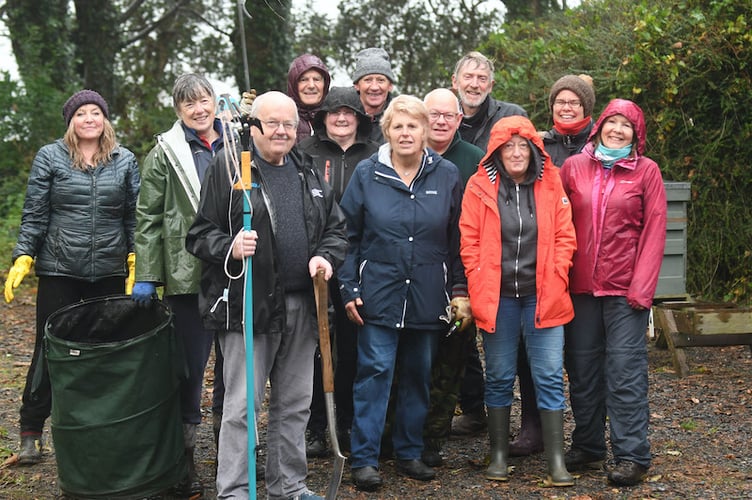
The Food and Farming pages found the Southern Beekeepers at the apiary in St John’s on Saturday, getting ready for the winter. They were braving the rain and gales to tidy the site, clearing it of brambles and other overgrown bushes.
Secretary Gwen Kelly told us that the interest in learning about beekeeping from members of the public is high.
’I think people are interested in finding out about bees,’ she said.
Their beginners’ course, which starts in January, is already fully subscribed, with 45 people signed up to it. The course begins with half a dozen lectures through the winter month, followed in April by some practical work.
.jpeg?width=209&height=140&crop=209:145,smart&quality=75)
.jpeg?width=209&height=140&crop=209:145,smart&quality=75)

Protective suits are provided for those who do not have them, as the hives of bees are opened up after the winter, allowing students to get used to seeing them and handling them and the equipment.
Gwen said: ’We bring the beginners to open the hives and show people what they should be looking for. Then they can come every Saturday afternoon through the summer.
If they live in the north they can go to Glen Truan which is run by the Ramsey beekeepers.
’You learn by talking to the other beekeepers. By the time you’ve done a summer you should be able to set up your own hives.’
A good hive, in a good year, will produce around 50lbs of honey but it’s not cheap to get set up.
It costs around £600 to buy hives and accessories and a protective suit with face mask.
Only brand new hives and other equipment can be imported to the island, although you can buy secondhand hives from an island-based beekeeper. This is because bees on the Isle of Man are thankfully free of diseases like Varroa which has wiped out so many in other parts of the world. Local beekeepers - and the Manx government - would like to keep it that way.
’Importing secondhand hives is an absolute no-no,’ said Gwen.
Even wearing a protective suit, beekeepers do get stung.
Gwen explained that everything you were told about pulling out a sting is wrong: ’You should never ever pull it out because then you are squeezing venom into your skin. Instead you should scrape it out with your fingernail or thumbnail.’
If you don’t fancy keeping bees yourself but want to buy genuine Manx honey, look for the name of the producer on the label which will always be there, along with their address.
It is available from a number of retailers and direct from some local beekeepers. To see the full list visit www.iombeekeepers.com/honey-for-sale.
l The Isle of Man Federation of Beekeepers is holding its annual honey show on Saturday, November 27, at the Methodist Hall in St John’s.
It will include honey, cookery, beeswax craft, flower arranging and art classes. It starts at 1pm and the event is open to all.
Comments
This article has no comments yet. Be the first to leave a comment.