
Stacey Astill was named as the second Manx Bard in 2015. This week she shares one of her latest poems and explains what led her to write it.
War and conflict have been a surprisingly big part of my life considering I have never fought in one.
From a young age I knew my grandfather, Alan, had been part of WWII in the 129th Battery of the Manx Regiment and had fought and been captured on Crete.
I knew a few funny stories from his time as a prisoner of war (PoW), and I knew that he had been very poorly when he came home. As I grew up I developed an interest in history and through that I began to study Manx PoWs and conflict more generally. As my studies progressed, Granda spoke to me more about what he had experienced, and I had the honour of interviewing other veterans across the world.

.jpeg?width=209&height=140&crop=209:145,smart&quality=75)
.jpeg?width=209&height=140&crop=209:145,smart&quality=75)
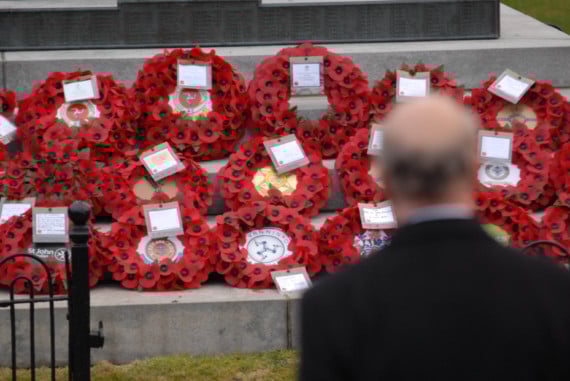
On Remembrance Day every year I lay a poppy and think of the men I’ve been lucky enough to speak with, and the ones I will never meet but whose innermost thoughts I have read in their personal letters and diaries.
It’s a very strange thing to learn about the absolute brutality and violence of war, to see the incredible resilience displayed by those caught up in conflict, and to also see that each of these people were entirely human.
Not every soldier was a hero, I’ve read awful things in diaries, men who were incredibly racist and anti-Semetic, men who thought Hitler had ’some great ideas’, and men who were unwilling to help others in the hardest of times. I think sometimes we forget this. A uniform doesn’t make a hero, actions do.
Some people were brave, some people were afraid and had no choice, but they were all there. Remembrance Day is for all of them, it doesn’t discriminate.
However, as much as I think it’s incredibly important to remember the atrocities of war, the way in which some people view poppies, especially in recent years, has made the day more complex for me. They have been used to stir up rumours about communities who themselves fought in the wars; they have been used to judge and shame people; and they have been used to sow division. That’s not what it is about.
In this poem I think about my Granda, who rarely had visitors who weren’t part of our family. He was lonely and elderly and had so many stories to tell.
It’s absolutely important to remember, but it’s also important to understand that people go about this in their own way. Don’t worry about whether others wear a poppy or not, but maybe do worry about veterans who require support for any number of reasons, loneliness, mental, or physical health. The Royal British Legion do amazing work, and I would definitely recommend throwing some money in their buckets, buying a poppy, or making a donation online, but don’t worry about policing other people. Remembrance Day isn’t about appearances, it’s about remembering those who gave their lives, their health, or their years. Remember them, work against fascism, stand up to racism, and honour them all.
Poppy Watch
In less than a week
Poppies will quietly rot on the memorials.
Fallen and silent.
Like the men who didn’t return.
Respect in hibernation.
In the weeks before the 11th,
No one visited him but us.
My Granda, a hero
Rotting quietly too,
Knees finally given in after more than 90 years.
They carried him through training,
On Crete, in Silesia.
But it’s no longer about him
Or ‘the boys’ he talked to Each Remembrance Sunday
On the plaque in the church.
Friends who didn’;t return.
Instead it’s image and appearance
It’s making sure everyone sees
Ensuring your poppy shows
You care so much more
Than those who don’t wear one.
I wish instead, that respect
Came in the form of hearing him.
Listening to him talk of stinking death and fear
The pain, the loss, the anger.
The Germans, who, were just like him.
In less than a week
Poppies will quietly rot
He matters for a day, to some,
But poppy or no,
We will always remember him.
Comments
This article has no comments yet. Be the first to leave a comment.