
The Manx Wildlife Trust is the island’s leading Nature Conservation charity with over 300 acres of land as reserves. We are promoters and champions of the wonderful wildlife and habitats in, on and around our beautiful island and keep a close eye on what is happening to it.
Our task this month is to keep a track of two very different species.
We would like to know the date and location of the first lot of ling heather which you see flowering on our heathlands.
There are three types of heather on the island. However, the ling heather is very distinctive.
.jpeg?width=209&height=140&crop=209:145,smart&quality=75)

It grows up to 90cm and it’s stems are woody and coarse, sometimes clumped together and close to the ground in exposed areas.
The delicate pink flowers grow loosely up the stem and the short, narrow leaves are borne in rows, and they appear from August to October.
They are a contrast to the tough, wiry, sprawling stems they grow upon.
Plants grow tightly packed together and can live for up to 40 years or more.
It’s the dates that we are interested in, as these can give us information about climate change.
If we gather this data over several years, we can spot any differences and it will help us map how our wildlife is responding to global warming.
So take a stroll in our uplands and get detecting!
The next species of interest is a particular little bird.
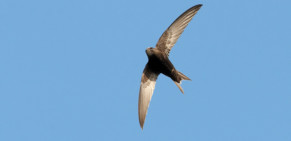
We would like you record the dates that you notice the swifts have left us.
The nimble little swift is black all over, with a small, pale patch on its throat.
Looking a bit like a boomerang when in the air, it is very sociable and can often be spotted in groups wheeling over roofs and calling to each other with high-pitched screams.
It is larger than swallows and martins (which have white undersides) and, unlike them, does not perch on wires, buildings or trees.
They are one of the first birds to leave the island and fly back to Africa.
Did you know that swifts spend almost all of their lives on the wing, even sleeping, drinking and mating while flying? They only land to nest.
So, what information do we need you to give us?
We need a location, an address, or map reference or GPS reference from your mobile phone .
There are many great apps you can download for this, as well as using Google maps.
We also need the date and time, your name, a contact number or email for you, in case of any queries we may have and, if you have one, a photograph.
You use our facebook page and message us, email via [email protected] or by telephone on 844432.
A big thank you to all the people who have contacted us via email, phone or letter.
The Trust has a small staff and so monitoring the island’s wildlife effectively is quite a tall order.
We still need you citizen scientists to be our eyes and ears on the ground and around the sea to help us to keep track of what is happening to our wildlife.
We are logging all the data and it will be passed on for use in the NBN atlas Isle of Man for anyone to look at and use.
Not only is it of interest to people on the island but also for researchers studying different species in different countries too.
by Dawn Dickens
Biodiversity Education Officer
Comments
This article has no comments yet. Be the first to leave a comment.