
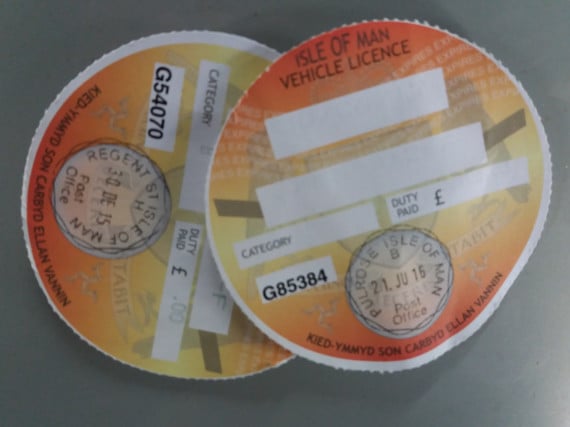
Highways chiefs have performed a U-turn over car tax hikes.
There was outcry in April when it emerged that thousands of motorists would be paying much higher vehicle duty this year.
The biggest increases would have been for the average older car with a standard, smaller engine size. Some drivers would have paid less - although curiously the reductions were for cars which produce the highest CO2 emissions.
But the proposals, which had been due to go before the April Tynwald, were withdrawn at the 11th hour by Infrastructure Minister Ray Harmer to allow his department to provide ’further clarity’ on its proposals.


Now they are back on the agenda for this month’s Tynwald sitting - but with some important changes. Increases for most smaller engine sizes have been reduced, while those for bigger engines are larger, and there is no longer a reduction for the biggest polluting cars.
And plans to charge white van man a flat rate of £200 for their small commercial vehicles have also been dropped.
Vehicles with 1,000-1,200cc engines will pay £111, up from £105 but down from £139 that had been proposed in April and cars with 1,200 to 1,800cc engines will pay £173, up from £163 but much less than the £194 proposed originally.
In contrast to the previous proposals, there are increases for every band of CO2 emissions, apart from the very lowest, ranging from £2 to £35.
And there is also a U-turn on the duty for motorbikes. It was due to be £40 for those under 125cc and £50 for all others.
Now it’s £41 for under 125cc, £52 for 125-400cc and £78 for over 400cc.
The proposed rate for cars are £54 for under 1,000cc; £111 (1,000-1,200); £173 (1,200-1,800); £244 (1,800-2,500); £398 (2,500-3,500); £491 (3,500-5,000) and £522 (above 5,000cc).
A Department of Infrastructure spokesman said: ’There were concerns that the previous order, which corrected the historically lower rate for capacity-based duty, was not the best way to fund the worthwhile savings for commercial vehicles, motorhomes, motorcycles, electric vehicles, classic vehicles and vans used for work purposes.
’With the department’s income budget already set by Tynwald it was not possible to simply reduce the impact on owners of vehicles with capacity-based duty. The department had to review the entire proposal.
’The minister decided that the fairest way forward was to provide for a general increase of 6 per cent above the duty set in 2015 and to allow for police vehicles and welfare vehicles to be zero-rated for duty and electrically propelled vehicles zero-rated for three years.
’The minister is committed to a full review of the duty system. Whilst the department needs to secure each year the funds required to maintain the highway network, the Minister is keen to look at new approaches to funding this maintenance.
’The department will be exploring a range of issues, including refinements to the current concepts, including payment by instalments and six-month licences, as well as more significant changes such as payment by fuel usage or mileage travelled.
’The department is also keen to make sure that whatever system is used, those who pay to use their vehicles can be confident that they are contributing appropriately to the upkeep of the highway network.
Consequently, the department will look at ways that make it easy for vehicle owners to pay and easy for the department to check that the right duty has been paid.’
Comments
This article has no comments yet. Be the first to leave a comment.