
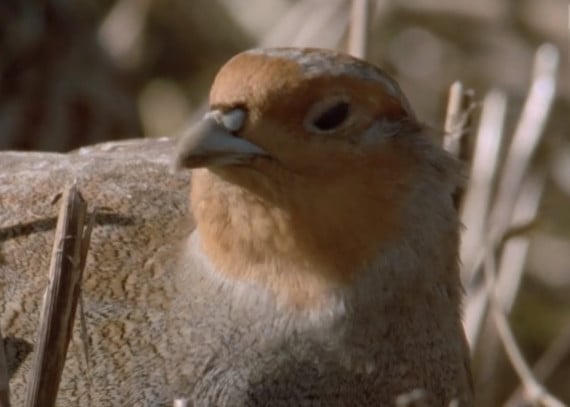
Two of the island’s nature charities have criticised plans by the Environment Minister to import an alien bird for hunting.
Geoffrey Boot is seeking Tynwald approval this week to extend the hunting season for the grey partridge and to allow for greater importation of the bird for this purpose.
A joint statement by Manx BirdLife and Manx Wildlife Trust has been issued in response to the proposed Game (Amendment) Order 2020.
According to the charities, only a proportion of released birds are shot; many, often most, are left to perish from starvation, disease or for example as road casualties.



The statement said: ’Our understanding is that the intention of the proposal is to ’’open up’’ the season for grey partridge in order to make (more) viable the importation, captive rearing, release into the wild and maintenance of flocks of this particular non-indigenous species for the "purposes of shooting".
’Any potential gains for native species, habitats and biodiversity need to be clarified, and are likely to be secondary outcomes.’
The grey partridge is a non-indigenous species. It arrived as an alien introduction in the 17th century.
In the 1970s, the remnant population of repeated introductions crashed and since 2002, there have been less than 10 records per annum, with none reported to Manx BirdLife since 2014, although it has not yet officially been declared extinct in the island.
The statement added: ’We believe the Isle of Man is not a suitable landscape for supporting a population of this non-indigenous species. Habitat improvement should be driven first and foremost by priorities relating to species and habitats of conservation concern.
’The stated habitat improvement, largely through the provision of cover for the non-indigenous grey partridge (and other non-indigenous game birds), could provide favourable conditions for ’native’ species that are considered priorities for conservation effort and resource, but a clear protocol for habitat creation is required.
’The likely habitat improvements cited in the stated reason are unlikely to improve the island’s biodiversity. More likely, these could provide small gains for some species that are already present on the island.’
Competition for food, transmission of disease and parasites, and diminishment of natural habitats could all be outcomes of rearing, releasing and maintaining populations for shooting, the charities say.
They also want answers to questions from DEFA including why the current season and shooting arrangements for pheasant, red-legged partridge and grey partridge are not satisfying the demand for hunting and shooting.
Comments
This article has no comments yet. Be the first to leave a comment.