
Great feedback about some of the many memories of the Isle of Man's involvement in the Commonwealth Games from last week.
As I write this, we celebrate this year's achievements, personal bests and, at this stage, David Mullarkey's fantastic bronze medal in the 10,000m, with more competitions yet to unfold.
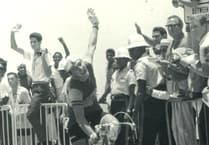
I was reminded that Peter Buckley's gold medal from the 1966 cycling road race is on display alongside other cycling memorabilia at the Leece Museum in Peel. The museum is named after Eddie Leece, who started it with Frank Quayle in 1984. I'll return to Eddie on another occasion. I knew him well and he led a fascinating life, serving as headteacher of Peel Clothworkers', a member of the Board of Education, chairman of Peel Commissioners on two occasions and one of only three Freemen of the City of Peel.
Speaking of museums, I recently revisited the Manx Aviation and Military Museum as part of a Rotary Club of Douglas event. Situated just south of Ronaldsway, you can't miss it, with former Manx Airlines aircraft in their distinctive livery outside.
Admission is free and the museum is run entirely by volunteers. It is something of a hidden gem and, much like Dr Who's TARDIS, feels far larger inside than its exterior suggests.
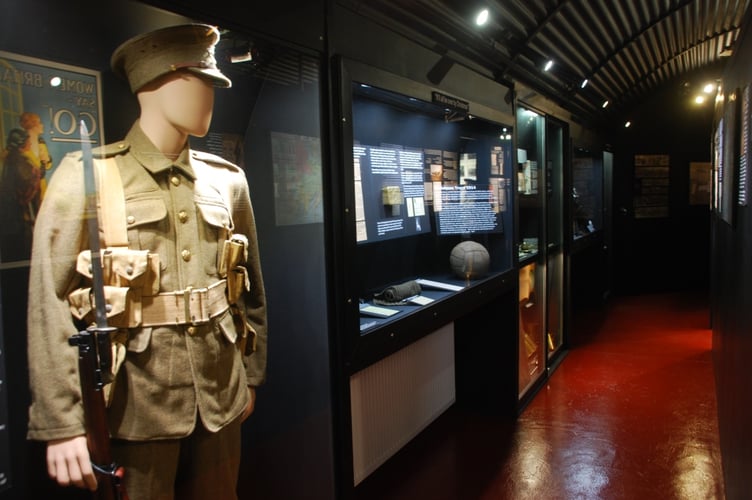
It is packed with fascinating exhibits and stories of human endeavour in times of adversity, with uniforms, medals, letters, photographs and memorabilia belonging to real Manx people. That gives it a much more personal feel than many larger military museums.
The museum tells two intertwined stories - the history of aviation on the Isle of Man, from the earliest flights through to modern commercial aviation, and the military history of Manx men and women who served in conflicts from the First World War onwards.
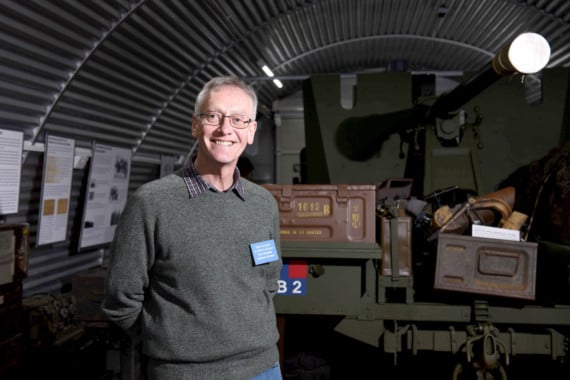
Ivor Ramsden MBE welcomed us to the museum. He has been involved since its earliest days and has spent decades researching Manx aviation and military history. His work was recognised with an MBE in 2019 and he is an engaging speaker who regularly gives talks on the island's military heritage.
He developed the museum largely in his spare time, assembling, conserving and cataloguing a collection of more than 9,000 artefacts, with a strong emphasis on the personal stories behind the objects rather than the objects themselves.
The museum has helped visitors trace relatives' military records, identify family members in photographs and better understand the experiences of Manx servicemen and women. Ivor describes it as being 'about people' as much as artefacts, reflecting his commitment to remembrance and historical interpretation.
.jpg?width=209&height=140&crop=209:145,smart&quality=75)
.jpeg?width=209&height=140&crop=209:145,smart&quality=75)
Even after spending about an hour there - nowhere near enough time to absorb everything on display - we were already making plans for a return visit sooner rather than later.
We then climbed aboard the museum's Manx Airlines British Aerospace ATP aircraft, where trustee Terry Liddiard, formerly general manager and later chief executive of Manx Airlines, spoke to us as we sat waiting for our traditional three-legged chocolate mints!
Briefly, Manx Airlines was created in 1982 during a period of considerable uncertainty in commercial aviation, both on the island and further afield. It was a joint venture between British Midland and Air UK.
Starting with a small team based at Ronaldsway, Terry oversaw the recruitment of staff, established operational procedures, developed the initial route network and built the airline's reputation for reliability and customer service.
Connections were established with London Heathrow, Manchester, Liverpool, Birmingham, Glasgow, Belfast, Dublin, Leeds Bradford, Southampton and Jersey throughout the 1980s and early 1990s.
Manx Airlines provided vital day-return services for businesses while the development of the 'Fare Cracker' services to Liverpool offered an affordable option for leisure travellers.
There is much more to the Manx Airlines story, perhaps for another day, but it was good to hear from Terry that, with one notable exception, Tynwald members were supportive of its establishment.
The museum also relies on a dedicated team of volunteers and trustees who give generously of their time. Thank you to them all.
While walking around the exhibits, I made a few notes about some of the many human stories so carefully presented. Here are just a handful, although nothing compares with seeing them for yourself. If you visit, make sure you allow plenty of time.
The building is home to the Museum of the Manx Regiment, the 15th (Isle of Man) Light Anti-Aircraft Regiment, Royal Artillery.
Lieutenant Colonel Brian Mylchreest OBE LVO was a wartime officer in the regiment, serving in the Middle East before later commanding it during the Normandy campaign following D-Day.
After the war he remained closely involved with the regiment, becoming a former commanding officer and president of the Old Comrades Association.
In 2005, the association transferred its entire collection of uniforms, medals, archives, photographs and artefacts from its museum at Tromode to the new exhibition hall, which Lieutenant Colonel Mylchreest officially opened on May 7 that year, deliberately timed to coincide with the 60th anniversary of VE Day.
The connection continues today, with Brian's son, David Mylchreest, serving as one of the museum's trustees. He is also a past president of the Rotary Club of Douglas.
The story of Robert Henry Cain VC is another particularly important exhibit. Alongside historic photographs and his Victoria Cross citation, it tells the remarkable story of his courage and service.
Born in Shanghai to Manx parents, he enjoyed an illustrious international career but always considered himself a Manxman. During a visit in 1950 he said: 'To me it is the best place on all the earth.' He later retired to Castletown and died in May 1974, aged 65.
HMS Valkyrie, the Royal Navy's radar training school, also has a fascinating story.
During the Second World War, almost all Royal Navy radar operators were trained on the Isle of Man. Established in 1941 on Douglas Promenade, the Regent and Granville hotels, which had previously been used as internment camps, were converted into barracks and lecture rooms.
Much of Douglas Head was taken over by the Navy. The Douglas Head Hotel and Collinson's Cafe became practical training facilities, while Nissen huts were built nearby to house radar equipment. Douglas Head was closed to the public and the entire operation was conducted under the strictest secrecy.
Hall Caine Airport also features prominently. Situated at Close Lake Farm on the road between Ramsey and St Jude's, it was developed by the sons of novelist Sir Hall Caine and opened in 1935.
Three airlines used the airfield before amalgamating and, in 1937, the majority of scheduled flights transferred to Ronaldsway. During the early years of the Second World War it served as a relief landing ground for RAF Jurby before that role ended with the opening of RAF Andreas.
Air crashes and the stories of lives and loved ones affected by them also feature among the many moving exhibits. They are not to be missed.