
Sadly, the virus has affected a significant number of cows on one particular farm, causing them to abort their pregnancies.
Generally cows infected with BTV are asymptomatic, and the virus is only identified when fertility and pregnancy issues arise.
In sheep and goats, however, the virus can be, and often is, deadly.


.jpeg?width=209&height=140&crop=209:145,smart&quality=75)
Clinical signs of the virus can be summarised by the term ‘fever, face, feet’ (FFF) – the animal develops a high temperature, its face swells (in particular the lips and tongue, which may turn blue), and foot lesions and lameness often develop.
Strict controls on animal imports to the island from the UK have been in place since the first BTV cases (specifically BTV-3) were identified in November 2023 in Kent.
The virus is transmitted by infected midges and not from animal to animal (and it is not a risk to humans), and it is thought that the outbreak in Kent was caused by windborne insects originating from the Netherlands.
The virus is a relative newcomer to Europe, and until the middle of the last century outbreaks were restricted to the African continent.
Midges thrive in relatively mild, damp conditions, which we have seen a lot of in recent years, and so it was only a matter of time before the Isle of Man saw its first cases. Livestock owners need to be hyper vigilant and report any concerns they may have to the animal health team in DEFA, and they should consider vaccinating their animals against the virus. It’s good to see that two new veterinary practices, specialising in agricultural work, have been established in the island in recent weeks.
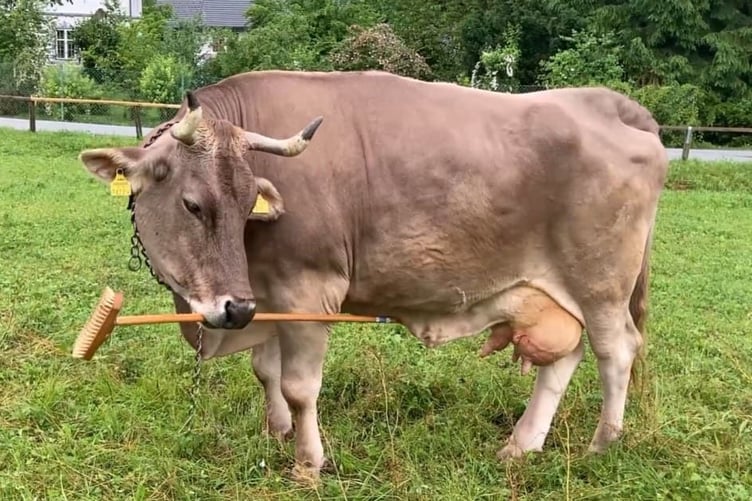
In happier bovine news, a 13-year-old Austrian cow called Veronika has made veterinary scientists in Vienna re-think the cognitive abilities of cattle – she has been using various implements, such as brushes and rakes, to scratch herself.
This may not seem particularly impressive given animals scratch themselves all the time, but Veronika adapts the tools she uses to suit the area she needs to itch: she uses the soft, rounded handle-end of a brush to scratch her tender underbelly and udder areas; and the harder bristly end to scratch the tougher skin on her rump.
How Veronika uses the tools is context-specific too.
She uses broader, less controlled strokes for the bristle-end of the brush, but more tightly controlled, targeted movements for the handle-end. The Viennese scientists undertook 70 different observation sessions before publishing their conclusions.
This kind of tool use is rarely seen in the animal world and has never been documented in cattle before. Using an implement as a multipurpose tool has only ever been consistently reported in chimpanzees who show the most varied use of tools, second only to humans.
Veronika is kept as a pet, and lives alongside her owner on a mountain farm. He has been observing her behaviours, and her increasing ability to use tools, for the past ten years.
Her longevity, her stress-free environment, and her access to a variety of manipulable objects have undoubtedly provided her with the opportunities to explore and innovate.
The big questions is whether tool use is something that other cows, or indeed bulls, are capable of but have simply not been observed doing. How many similar cases have gone undocumented simply because no one was looking for them?
Most farmers will testify that cattle are sentient creatures with distinctive personalities, and they deserve to be treated with respect and kindness. In turn, our thoughts should be with the island’s agricultural community who have been having a particularly tough time of late, with veterinary provision uncertainty, BTV and waterlogged fields.
All the more reason to buy Manx produce whenever we can.