

It may be a bit bombastic to say we were embarking on a Lord of the Rings-style quest or searching for our Moby Dick, but both my colleague and I were determined to find it.
Perwick Bay in Port St Mary is an odd place. It is a harsh landscape full of large pebbles, seaweed and jutting rocks, but it is peaceful and has a beauty of its own.
I assumed the carving would be in one of the caves near Perwick Bay beach.
Back in February, I first went looking and decided to head down a path just after Clifton Road ends to a cove before Perwick Bay.
The tide had to be pretty far out to access this part of the beach.
My thinking was to search the caves as I went along. But it was wet and the slippery rocks were treacherous. I thought I was going to do myself an injury with every step.
I entered one smaller cave and scanned the walls for any sign of the carving, but it was all in vain.
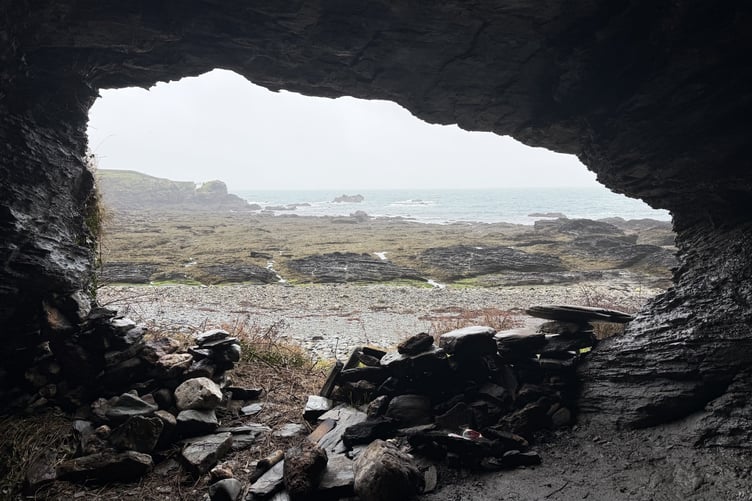
I gingerly traversed the coastline round to the larger cave, which has an interesting story of its own.
.jpeg?width=209&height=140&crop=209:145,smart&quality=75)



A small bone from the now-extinct great auk was found during excavations of an Iron Age site at the cave.
Excavations in 1969 uncovered the remains of a habitation dating to around 70AD, with bones from 15 species of bird, including the great auk, as well as shellfish, a seal, a pony and a human burial.
Anyway, all that remained when I went was a sleeping bag and a few tins of lager. No great auk bones and, sadly, no carving despite searching high and low.
It later transpired that the carving was not in the cave but somewhere nearby, so my hunt had been doomed to failure.
My colleague had also searched the bay for the carving, with no joy either.
I returned a few months later in much sunnier, drier weather, but now the search had widened to basically any rock formation along that stretch of coastline.
Admittedly, I had little hope, but I knew it was not too far away from the cave.
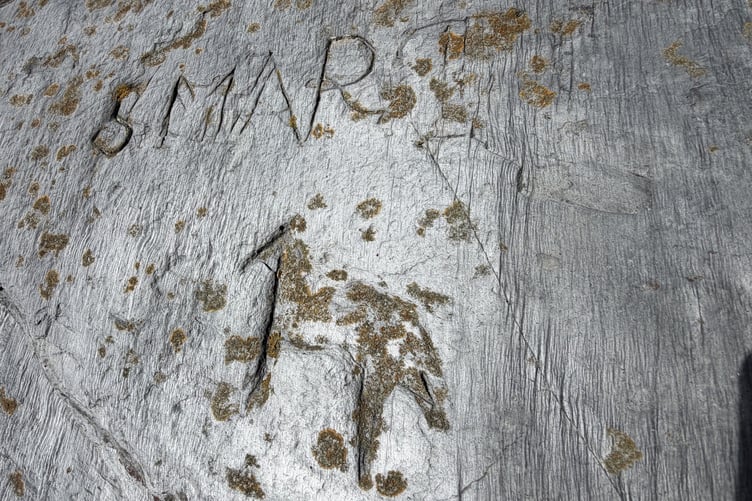
I stuck largely to the flat, strata-like stones as they seemed the most likely surfaces for a carving.
I was on the verge of giving up when I noticed some flat rocks to the left of the cave, if facing the sea, so I decided to have one last look.
Lo and behold! After a couple of minutes, there it was.
The carving was rather small - only about six inches long. If you were picturing something like the chalk Uffington White Horse in Oxfordshire, you would be disappointed.
In reality, it is a small and crude carving with the word ‘Smart’ written above it, but it has a certain charm. I was incredibly excited as we’d been talking about finding it for months.
Little is known about it. It could have been carved 500 years ago or 10 years ago.
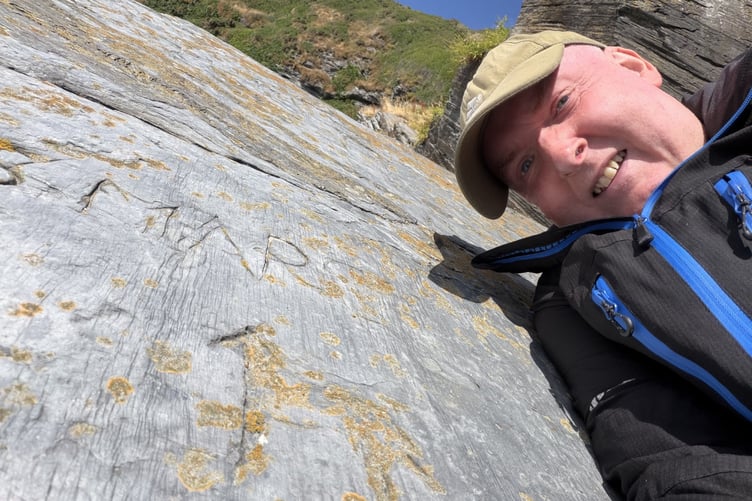
There is speculation that workers from the nearby Glen Chass mine could have carved it. If so, it would make the carving well over 100 years old, as mining ceased in the later 19th century.
Regardless, I had finally managed to find my white whale and complete my ‘epic’ quest.