.jpg?width=94&height=94&crop=1:1,smart&quality=75)

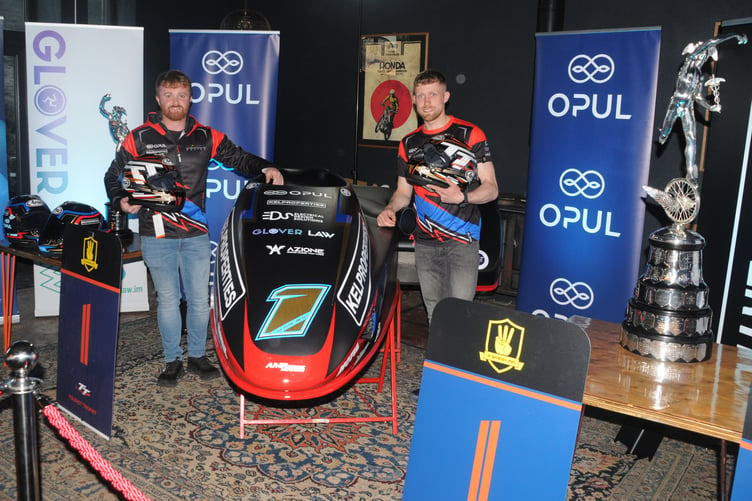
The sidecar event will see the biggest radical change to power output since 1,000cc engines were banned from the Mountain Course in 1990.
At that point, 750cc two-strokes and 1,000cc four-cylinder four-strokes - that had smashed the previous standards set primarily by German flat-twin BMW and British single and twin powerplants - were outlawed.
In came FIM Formula Two Sidecar race regulations for two-stroke engines not exceeding 350cc or four-strokes up to 600cc.
The 350 twins initially proved quite successful, but their basic engine design became outdated and unreliable, making way for newer four-stroke fours to take over.
Honda and Yamaha motors were the most regularly used, but Kawasaki and Suzuki inline-fours also became successful. Local man Dave Molyneux uniquely won TTs using all four of the popular Japanese makes of engine, having registered his first on a 750cc Yamaha in the big engine swansong in 1989.
Other changes have been implemented to both engine and chassis technical specifications as the three-wheel class has evolved over the past 35 years, but this fortnight will see a major reduction in pace that could see lap speeds go back to what they were around the time of the Centenary TT in 2007 when Nick Crowe and Dan Sayle lapped at 116.667mph (19 minutes 24.24 seconds).
Ben and Tom Birchall achieved the first 120mph lap for sidecars in 2023, in what was their final TT together prior to Tom retiring.
Over the past two years, the emphasis has been on another pair of siblings – Nick Crowe’s sons Ryan and Callum.
Scoring back-to-back doubles on a similar LCR Honda outfit to that used by the Birchalls, they hiked the lap record up to 121.021mph (18m 42.350s), three seconds inside Ben and Tom’s.
But 2026 could well see a drop of around three to four miles per hour on average lap speeds, adding as much as 30 seconds per lap to their times and the best part of two minutes to a race. The fastest laps may well be in the region of 117 or 118mph, turning the clock back the best part of two decades.
It has all been achieved by forcing crews to fit a relatively simple thin piece of metal – effectively a restrictor plate - between the manifold and the throttle bodies which reduces the inlet port dimension from 38mm to 27.5mm.
This could reduce the top speed on the Crowes’ Honda to around 150mph on Sulby Straight as opposed to 163mph last year.
The ‘serious’ crews are trying other tuning methods to grab some of that lost power back, so it will be interesting to see how they cope with the new restrictions.
Ben Birchall has fellow former world champion Mark Wilkes beside him for the first time. Wilkes is a highly-experienced passenger on the Mountain Course having previously partnered Tim Reeves, Harry Payne and last year newcomer George Holden.
At number two (Birchall/Wilkes are three) are Pete Founds and Jevan Walmsley who did not race last year following a big crash exiting Rhencullen in qualifying.
Next up are Lewis Blackstock and Oscar Lawrence on the first of the Yamaha-powered machines. The pair were eighth in race one last year but Blackstock has three fourth-place finishes to his name.
Lee Crawford and Scott Hardie are a very capable pairing, starting with number six on their outfit, which is powered by a Kawasaki motor. They were third in both races last year, in the absence of Founds/Walmsley.
Former world champions Todd Ellis and Emmanuelle Clément have two years under their belts, so have just about served their Mountain Course apprenticeship, and with a brace of fourth places last year they will be gunning for a podium place this time.
At seven are Tim Reeves and new passenger Melanie Farnier on the Carl Cox Motorsport LCR Honda. Reliability has always been Tim’s bugbear and he has only managed three finishes since 2018.
He did not contest last year’s TT at all, but has bags of experience and two best finishes of a second and four thirds so is well capable of getting onto the podium again with a suitably experienced passenger who has a best finish of seventh with Paul Leglise in 2022.
George Holden had two sixths in his debut last year and has replaced Wilkes with Jake Lowther, this time on the Barnes Racing LCR Honda.
His father, former double TT winner John Holden, is making a return at the age of 69. He will race with No.11 on the Yamaha-engined outfit Dave Molyneux built for him over the winter. John has the experienced Philip Hyde beside him.
Kieran Clarke/Andrew Johnson and Stephen Kershaw/Rhys Gibbons start with numbers nine and 10 on their outfits.
Clarke and Johnson were best newcomers with two fifths last year, Kieran setting the fastest-ever lap by a rookie driver at 114.884mph.
Reigning British F2 champions Kershaw and Gibbons also had a good run in race two to finish seventh at Kershaw’s first attempt – Gibbons having enjoyed a third and fourth with his uncle, Alan Founds, in 2024.
There are a number of other good regular TT crews entered, not least Greg Lambert/Andrew Haynes, Steve and Matty Ramsden, Wayne Lockey/Matty Rostron, Carl Fenwick and local passenger Jake Roberts.
The other all-local pairings in the improved field of 37 outfits are Darren Hope/Paul Bumfrey (#18) and David Marshall with Mountain Course newcomer passenger Ben Gale (#37).
Unlike the solos, there are no seeds in the three-wheel class, so, as in 2025, the starting order will be determined by qualifying position. The fastest driver and passenger pairing during qualifying will be first to leave the line in both races, followed by the second and third quickest, and so on.
- Don’t miss Media Isle of Man’s free TT News supplements inside the Isle of Man Examiner and Manx Independent over the next two weeks.
Each edition will be packed with features, reports and all the latest news from this year’s TT festival.
Digital editions can be bought online at https://www.iomtoday.co.im/subscription/digital_subscriptions, while print subscriptions can be ordered by calling 01624 695623.

Comments
This article has no comments yet. Be the first to leave a comment.