
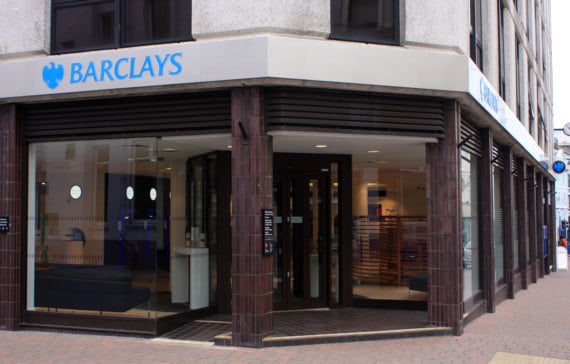
A former Barclays Bank assistant manager has been sentenced after setting up a fake account so she could take out a £2,000 loan.
Louise Ellen Young also made false compensation claims and forged documents to cover her tracks.
High Bailiff Jayne Hughes sentenced the 48-year-old to 200 hours of community service after she pleaded guilty to six counts of fraud by false representation and one of concealing or removing criminal property.
The court heard that in total £2,995 was taken but Young had since paid around £1,000 back, with the bank writing off the rest.

-and-Mike-Read-(right)-of-Team-Cheerfulness.jpeg?width=209&height=140&crop=209:145,smart&quality=75)

We previously reported that Young was working at the Victoria Street branch of the bank in March 2020 when the crime was uncovered.
Young had set up an account in 2015 in the name of a former customer and taken out a loan on the account of £2,000.
The customer had moved to Scotland in 2013 and then closed her Isle of Man account in 2015.
However, she received a letter this year advising her of loan arrears in relation to the account.
After investigations, the financial crime team found that Young had reopened the account in July 2015 recording that the woman had attended another Barclays branch.
Young had forged the woman’s signature and taken out a loan of £2,000 which she paid to a savings account linked to her.
She had then set up a direct debit to repay the loan at a rate of £46 per month from her own account.
However, fees had been incurred as she had insufficient funds to pay the £46 at times.
Young also raised 21 fictitious complaints between September 2016 and May 2019 which had resulted in pay outs of £995 in total but she had transferred the money to help repay the loan.
In May 2019, the bank started an audit of its accounts as part of its Know Your Client (KYC) procedures with the fake account one which was scheduled to be reviewed.
To cover her tracks, Young then forged a colleague’s signature to confirm that a home visit had been carried out to verify the woman’s details and that her passport had been checked.
Young was interviewed by police and said that, at the time, she had really needed the money and had always intended to pay it back.
She said that her debt had spiralled out of control and she had been ’robbing Peter to pay Paul’.
She also said that she had been suffering from anxiety and depression, and had been drinking.
Defence advocate Laurence Vaughan-Williams described the case as ’almost a 21st century morality story’.
He said: ’What began as a desperate attempt to raise £2,000 to pay for her son’s university education when other avenues had been cut off, turned into a nightmare.
’Rather like a stone rolling down a mountain the burden became heavier.
’She has gone from an assistant manager with a salary of £25,000 per annum to a woman attending Alcoholics Anonymous and living on £86 per week.’
Mr Vaughan-Williams handed in six letters of reference for his client, including ones from former colleagues at the bank, and quoted one which said: ’The embarrassment of this situation is the worst punishment.’
The advocate continued: ’She had to reach rock bottom before she could start the ascent to redemption.’
A probation report said that Young was receiving help from relevant agencies.
Mrs Hughes said that grounds to suspend the sentence were Young’s lack of previous convictions, her guilty pleas, the probation report assessment that she was a low risk of reoffending, and the impact custody would have on her family.
Young was also ordered to pay £50 costs.