
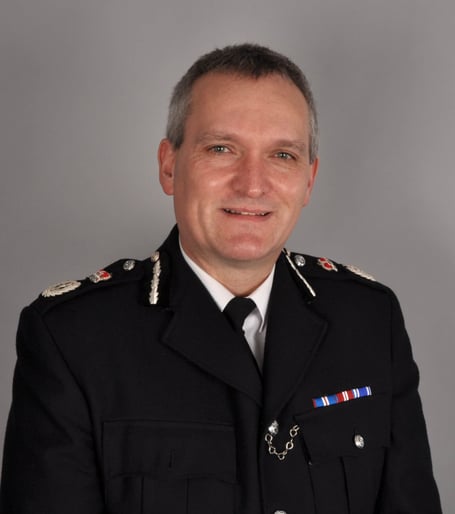
The Chief Constable has warned that the financial pressures placed on the Manx force has left it ’living hand-to-mouth’.
Gary Roberts makes the comment in his latest annual report which is to be presented at this month’s Tynwald sitting.
His report shows that recorded crime is on the rise - but it remains at the third lowest level in 40 years.
A total of 2,176 crimes were recorded during the 12 months to the end of March this year - an increase of 11 per cent on the previous year and up 2 per cent against the three-year average.




It means that crime has returned to levels seen a couple of years ago, which are about a third of those seen in the UK.
More than half of the additional 208 offences can be attributed to a sharp rise in the number of arrests for possession of cannabis.
The report notes exceptionally low levels of traditional crime, with non-domestic burglaries the lowest on record - 30 compared with more than 400 in the early 1990s - and just three offences of robbery recorded.
And the Chief Constable says this offers the first real evidence that cuts in the scale and scope of neighbourhood policing are now being felt.
He states: ’I have predicted for a number of years that there would be consequences to the reduction of front-line services. Those consequences are now being seen, though as yet they are comparatively small.’
Mr Roberts says the force’s biggest challenge is dealing with the rapid and major growth in financial crime investigation. He says he could easily allocate all his detectives to dealing with such crimes and still not have enough.
And he notes: ’The constabulary is effectively living hand to mouth and its resourcing is almost constantly stretched. The challenges are many and complex. The situation is be no means critical but it could become so unless remedial action is taken.’
He admits that for the second year running, the constabulary has been forced to prioritise other matters - notably sexual offences and financial crime - over the active investigation of drugs importation.
The number of specialist drugs investigators has been reduced to a level where it is difficult to conduct lengthy and complex inquiries, he notes.
And he adds: ’Drugs policy is a matter for our politicians, but the current situation ought not to continue. The island needs a new drug and alcohol strategy based on evidence and which focuses on health aspects as well as enforcement.’
But the Chief Constable points out the report contains a lot of positive data and the island remains the safest of the large British isles.
The crime detection rate of 46.9 per cent is well above the UK average, while confidence in the constabulary remains high. And Mr Roberts says the police should not be judged purely on statistics.
’Simply counting crime is a crude measure. Assessing performance in this way accepts the flawed notion that the theft of a small amount of cosmetics from a retailing giant carries the same weight as a murder or rape,’ he said.
Crime accounts for about 20 per cent of overall demand, with officers tackling an increasingly complex range of vulnerability and public protection matters.
Comments
This article has no comments yet. Be the first to leave a comment.