
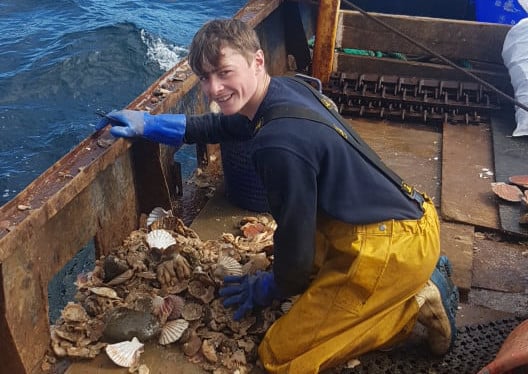
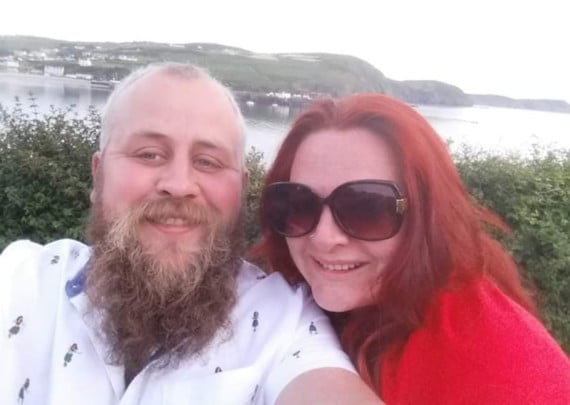
Scallop fisherman Luke Corkill has seen an opportunity during the current crisis to offer fresh, line-caught fish from Manx waters to local customers.
’It was a bit of a "head in hands" moment to see how we could keep the business going,’ says Luke’s wife Lindsey, describing how the couple felt when the full impact of the coronavirus crisis began to hit home and the factories that normally take Luke’s scallop catch for processing all closed.
The new venture grew naturally out of something that Luke and Lindsey, and Lindsey’s daughter Isla, 15, have always enjoyed doing together.
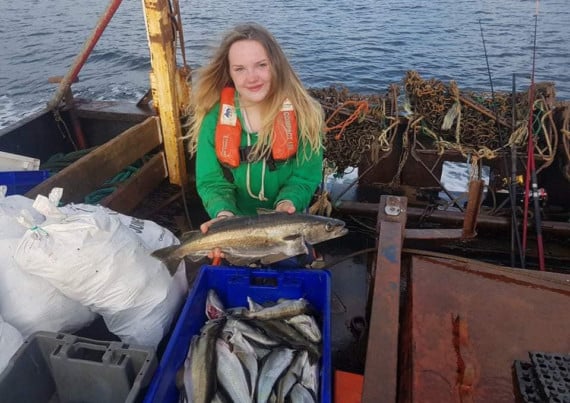
Lindsey explains: ’We enjoy fishing as a family and Isla has grand ambitions to become the first female fishing boat skipper on the Isle of Man.


-(2).jpeg?width=209&height=140&crop=209:145,smart&quality=75)
’We often go fishing for mackerel or callig so it just seemed a natural progression to make that an arm of the business and be able to provide line-caught fish to the local community. With the borders closed it made sense to look at the local market.
’Historically, Luke’s always fished for scallops and queenies and we wanted to look at diversifying and bringing more sustainable fish to the community.
’We’ve been getting asked for fresh locally-caught fish for years and we thought it was time to answer that call.’
Although it’s referred to as ’line-caught’ it isn’t always just a single line. In addition to using rod and reel, to make it viable the Corkills have invested in two mackerel ’gurdys’, each of which is basically a wheel to which you attach 25 hooks, thus increasing the amount of fish you can catch at a time.
Luke says: ’In the past two weeks we have landed over 200kgs of fish, mackerel, callig and saithe (coalfish or coley).’
It’s a very sustainable way of fishing because there is no ’by-catch’, of other species, as there would be with nets. Studies have also shown that the quality of the fish is better with whiter flesh and firmer fillets.
All the fish Luke catches is sold fresh, directly to the customer, which has meant setting up new ways of marketing his catch.
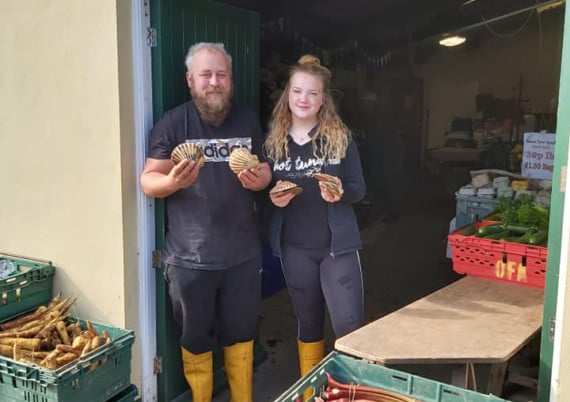
Luke says: ’Our main sales portal is Mackerel Mann, our Facebook page, and people can send a message which we usually respond to within a few hours to let them know when catches and deliveries will be available in their area of the island.’ They also sell their fish from Bry Rad’s Fresh Veg Shed in Ramsey every Saturday.
Luke says: ’I’m absolutely loving it. Normally the scallops go into a bag and go to the yard [for processing].
’We land to Isle of Man Seafoods and they do a great job, but now, as well as landing to the yard, I also get an opportunity to interact with my customers who are actually going to eat my product and I’m loving it.
’Lots of customers come back each week and they say they will carry on after this is over.’ Now the factories have started to reopen and Luke says: ’With the fishing on top of the scallops we’re doing slightly better than we were before.’
But he adds: ’It’s been a huge gamble and you’ve got to know where the fish is.’
As well as insight gained from going out fishing as a family, Luke had some extra inside knowledge from his uncle, Mark Corkill. Luke says: ’He was a big investor in my boat and he has been line fishing for over 30 years from his small recreational boat.’
Luke has been fishing for 16 years and started out by doing a Boat Skippers’ NVQ course, covering crew safety, navigation and sea survival. It took four years, fishing all week and doing the course at the weekends.
Lindsey says: ’When he finished it he could have entered the merchant navy as an officer but his heart was always in fishing.’
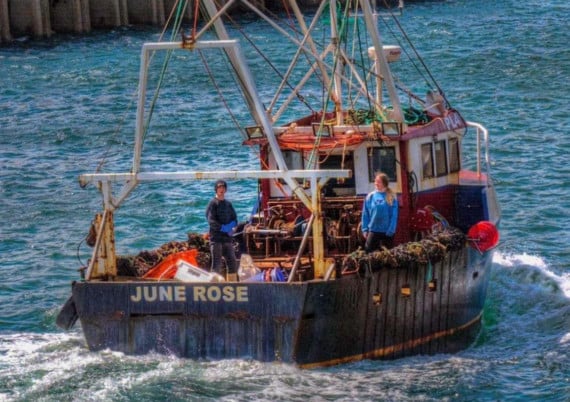
He now runs his own boat, the June Rose, with his young deckhand, Matthew Boyde.
Luke is currently the only fisherman in the island to have diversified into making line-caught fish a part of his business and it has led to a very special accolade, as Lindsey explains: ’We have been accepted as a UNESCO Biosphere Partner: it’s a more sustainable way of fishing with less by-catch and the carbon footprint is massively reduced with everything caught locally and sold locally.’
She adds: ’The important thing is we need the support of the community to keep this going.
’We have tried to keep prices affordable and, so long as we’re viable and can keep going and can keep our costs low, we’re happy to pass that onto our customers.
’As a family, we are really passionate about the Isle of Man and Manx produce and so it’s really important to us that we’re bringing really good quality fish to the local community in a sustainable way.’
Comments
This article has no comments yet. Be the first to leave a comment.