
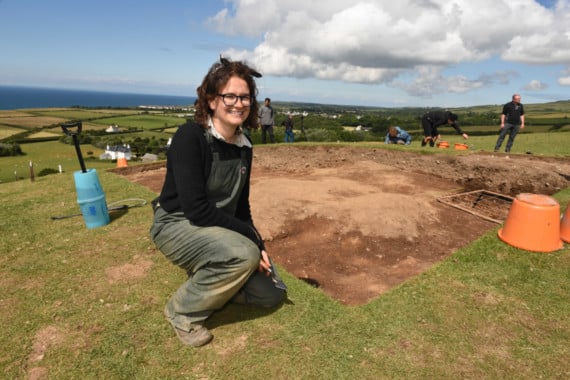
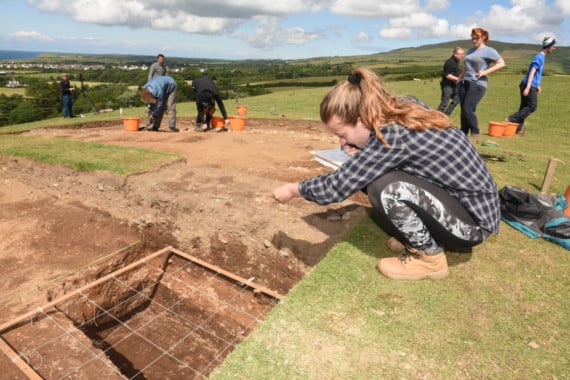
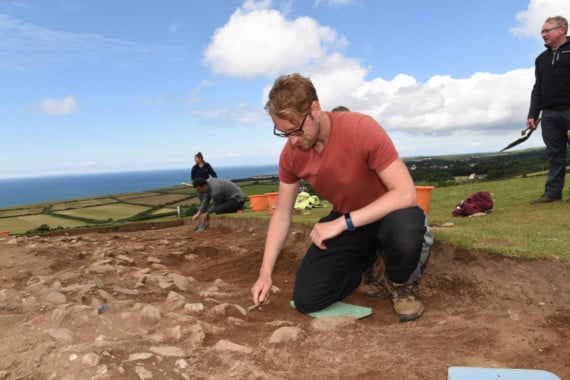
A team of archaeologists, students and local volunteers have been investigating what was believed to be a burial mound in fields just south of the village of Kirk Michael. We visited the site to see what they have managed to unearth.
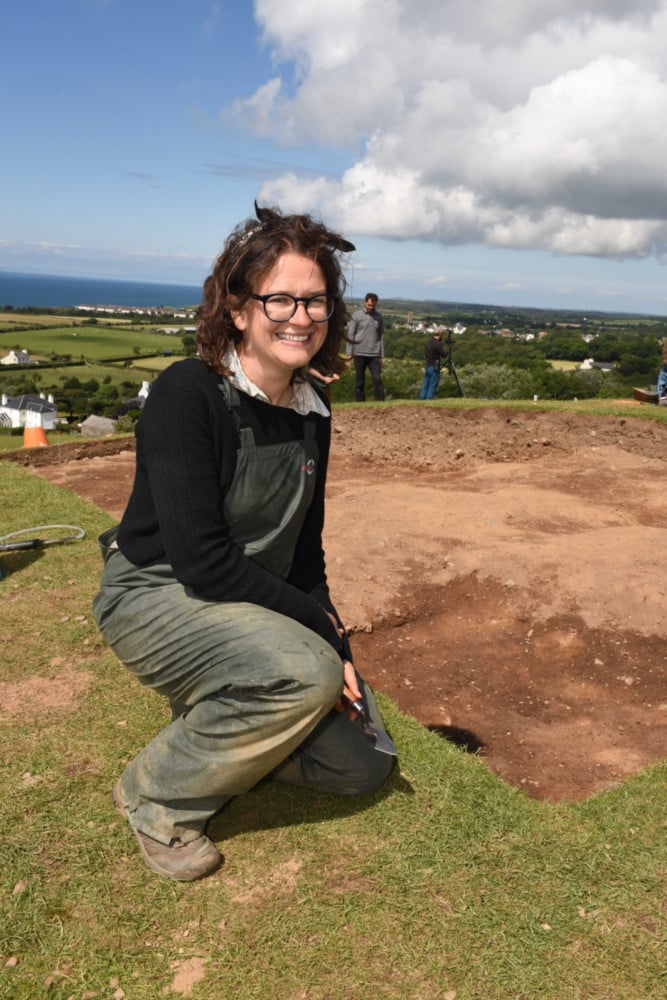
The dig was directed by former Castle Rushen High School pupil Dr Rachel Crellin, who now lectures in Archaeology at Leicester University, and Dr Chris Fowler who is a lecturer at Newcastle University.
The project team, supported by Manx National Heritage, has been investigating prehistoric round mounds for the past twelve months carrying out desk-based research, geophysical surveys, and mapping. The Isle of Man is home to over 160 round mounds. Round mounds are earthen mounds built over human burial sites. They are found throughout the British Isles and in Continental Europe. First appearing in the Neolithic period, around 3800-3600 BC, different kinds of round mounds were built sporadically during the Neolithic and in large numbers during the Early Bronze Age.
Dr Crellin said: ’One of the things that makes archaeology so interesting is that we can do all kinds of geophysical surveys, we can look at old maps, aerial photographs and read everything written about a site - but - until we actually excavate it we still do not really know what it is.’

As it turns out, the site has yielded some interesting finds including the collar of what is believed to be a burial urn - in those days on the Isle of Man people who died were routinely cremated and one of these urns was placed upside down on top of their ashes.
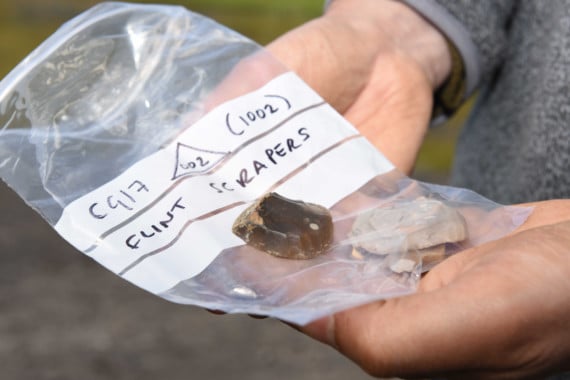
They have also found a number of pieces of flint which have been carefully and painstakingly fashioned into tools.
Dr Fowler showed us one of them, a smooth piece with bevelled edges which fits beautifully into the thumb and palm of a right-handed person. This was using for scraping the fat from the inside of animal hides which could then be dried.
It is significant that the site chosen by these early inhabitants of the island overlooks the sea with a good view of both Scotland and Ireland
Amber Roy, outreach officer for the project, explained: ’There was lots of movement of ideas and material culture around this ear of the Irish Sea and the Isle of Man was at the centre of this.’
The team has been keen to share their findings on the island. They have been running workshops for local schoolchildren about the excavation and what archaeologists do. They have also been offering the public the chance to take part in daily site tours where the archaeologists have shown them around the excavations and explained their findings.
The team will be returning to the island to take part in the Heritage Open Days in the autumn and run more workshops for schools exploring what archaeologists can learn from skeletons.
Dr Crellin added: ’A burial mound like this has not been excavated on the island for some time - by using modern techniques we hope to learn new things about the site and about prehistory on the island more generally. This has been a really exciting opportunity to shed new light on our prehistory and we are really grateful for the support of the landowners, Manx National Heritage, and the Isle of Man Steam Packet who have all helped to make the dig possible.’
www.roundmounds.wordpress.com
Comments
This article has no comments yet. Be the first to leave a comment.